Have you ever been sitting in class, working at your desk, or watching television when your eyes suddenly start closing? Perhaps you are so tired that you begin to fall asleep without even realizing it. In English, people often describe this situation with the expression “dossing off.” However, you may also have seen the phrase written as “dozing off” and wondered whether the two expressions mean the same thing.
Understanding the dossing off meaning can help you recognize informal British English, understand everyday conversations, and avoid confusing similar-sounding expressions. In this guide, we will explain what “dossing off” means, how it differs from “dozing off,” how to use both phrases in sentences, and which spelling is appropriate for different situations.
Quick Answer: Dossing Off Meaning
Dossing off is an informal expression associated with British English that can mean avoiding work, wasting time, or doing very little when you are supposed to be working. Depending on the context, it may also be used informally to suggest taking it easy.
However, if you mean that someone is becoming sleepy or falling asleep unintentionally, the standard expression is “dozing off.”
Examples:
- Dossing off: The manager caught the employee dossing off instead of finishing the report.
- Dozing off: I was so tired that I started dozing off during the movie.
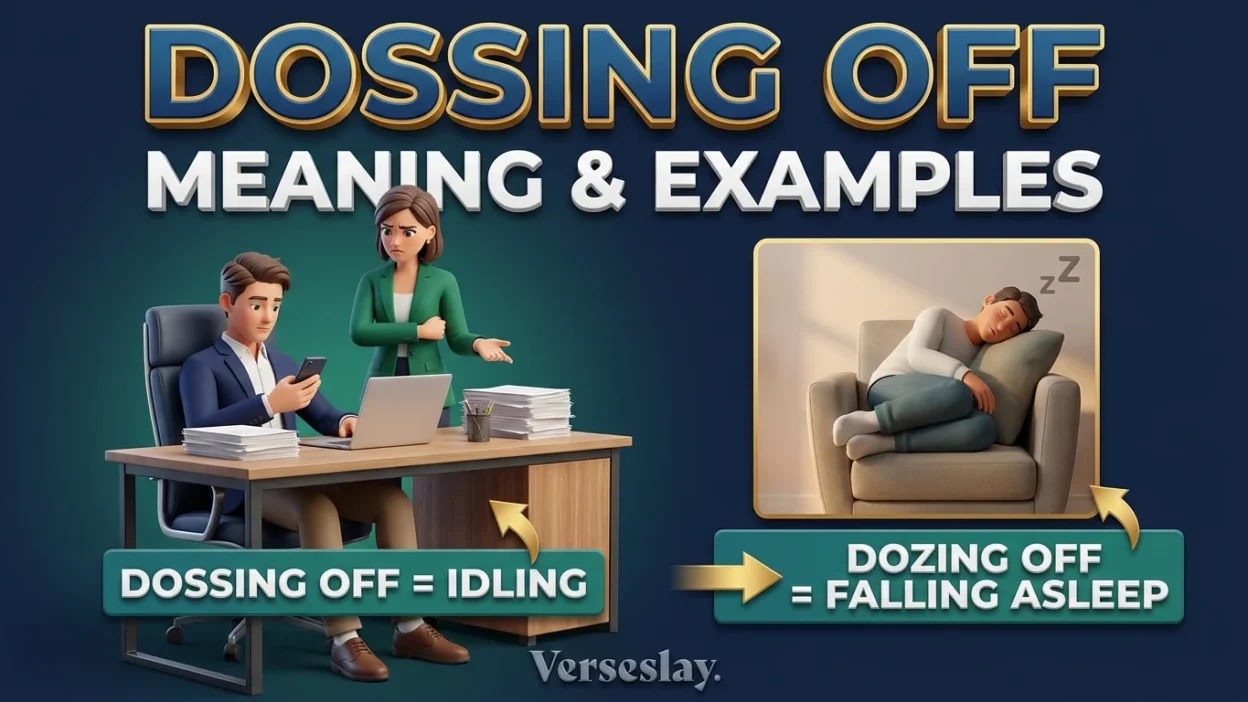
The important distinction is that dossing off is associated with idling or avoiding work in British informal usage, while dozing off means gradually falling asleep.
What Does Dossing Off Mean?
The phrase “dossing off” comes from the informal British verb doss, which can mean to spend time doing very little, avoid work, or rest without doing anything productive.
When someone says that another person is “dossing off,” they often suggest that the person is not working as expected or is wasting time instead of completing a task.
The expression is informal and may sound critical, especially when used by a teacher, supervisor, or employer.
Examples of Dossing Off
- The students were dossing off instead of completing their assignments.
- My colleague spent the afternoon dossing off at his desk.
- The supervisor told the workers to stop dossing off and get back to work.
- He was supposed to clean the room, but he spent the whole morning dossing off.
- Instead of preparing for the exam, she was dossing off with her friends.
In these examples, the expression suggests that someone is being unproductive or avoiding responsibilities.
Is Dossing Off Always Negative?
Not necessarily. The phrase often carries a negative or disapproving tone, but its exact meaning depends on the context.
For example, friends might use dossing about or dossing around to describe relaxing without a particular plan. However, when a person is expected to work or study, dossing off usually suggests wasting time or not making an effort.
Compare these examples:
- Negative: The employee was dossing off during working hours.
- Casual: We spent the afternoon dossing around at home.
The first sentence criticizes a lack of productivity. The second describes a relaxed, unstructured afternoon.
What Does Dozing Off Mean?
“Dozing off” means gradually falling asleep, usually unintentionally or for a short period. It often happens when someone is tired, comfortable, bored, or sitting somewhere quiet.
Unlike dossing off, the expression dozing off directly refers to sleep.
Examples of Dozing Off
- I was so exhausted that I started dozing off on the sofa.
- The child was dozing off during the long car journey.
- He kept dozing off while watching television.
- I nearly dozed off during the lecture because I had slept very little.
- She was dozing off in the waiting room when the nurse called her name.
These sentences describe someone becoming sleepy or falling into a light sleep.
Why Do People Confuse Dossing Off and Dozing Off?
The two phrases look and sound similar, especially to English learners. Both can appear in informal conversations about what people are doing when they should be busy, resting, or paying attention.
However, their meanings are different:
- Dossing off: Being idle, avoiding work, or doing very little in informal British usage.
- Dozing off: Becoming sleepy and beginning to fall asleep.
If you want to say that a student is falling asleep during a lesson, write “The student is dozing off,” not “The student is dossing off.”
Dossing Off vs Dozing Off: Key Differences
| Feature | Dossing off | Dozing off |
|---|---|---|
| Main meaning | Idling or avoiding work | Gradually falling asleep |
| Typical use | Informal British English | Everyday English |
| Common context | Work, school, responsibilities, leisure | Tiredness, sleepiness, quiet settings |
| Tone | Often critical or disapproving | Usually neutral |
| Example | He was dossing off instead of working. | He was dozing off during the film. |
| Related expression | Dossing around | Nodding off |
Remember that dossing off and dozing off are not interchangeable when you want to describe sleep.
Common Expressions Related to Dossing Off
Learning related phrases can help you understand informal English and choose the most natural expression.
1. Dossing Around
Dossing around means spending time doing very little or relaxing without a clear purpose. It is associated with informal British English.
Example: We spent the weekend dossing around at home instead of going anywhere.
2. Slacking Off
Slacking off means making less effort than expected or failing to work as hard as you should.
Example: The manager noticed that the team was slacking off near the end of the day.
This expression is useful when you want to emphasize reduced effort or productivity.
3. Dozing Off
Dozing off means gradually falling asleep.
Example: I was dozing off on the bus after a tiring day at work.
4. Nodding Off
Nodding off also means beginning to fall asleep, often when your head starts to drop because you are sleepy.
Example: My father was nodding off in his chair after dinner.
5. Taking It Easy
Taking it easy means relaxing and avoiding unnecessary effort. Unlike slacking off, it does not automatically suggest that someone is neglecting their responsibilities.
Example: I am taking it easy today because I have finished all my work.
Common Mistakes When Using Dossing Off
English learners sometimes use similar expressions incorrectly. Here are a few mistakes to avoid.
Mistake 1: Using Dossing Off to Mean Falling Asleep
Incorrect: I was dossing off during the movie because I was sleepy.
Better: I was dozing off during the movie because I was sleepy.
Why? Dozing off is the standard expression for gradually falling asleep.
Mistake 2: Assuming Dossing Off Is a Formal Expression
Incorrect: The employee was dossing off, according to the formal performance report.
Better: The employee was avoiding work or failing to complete assigned tasks.
Why? Dossing off is informal. In professional reports, more precise language is usually appropriate.
Mistake 3: Confusing Dossing Off With Slacking Off
These expressions overlap in meaning, but they are not always identical.
- Dossing off can suggest idling or doing very little.
- Slacking off specifically suggests making less effort than expected.
Example: The employee was slacking off by repeatedly leaving tasks unfinished.
Mistake 4: Assuming Everyone Uses Dossing Off the Same Way
The word doss is particularly associated with British informal English. Some English speakers may be unfamiliar with it or may understand it differently depending on the context.
If you want to communicate clearly to an international audience, consider using phrases such as wasting time, avoiding work, or doing very little.
Is Dossing Off Used in American and British English?
The phrase dossing off is much more strongly associated with British informal English than with American English. The verb doss has several informal uses in British speech, including idling or spending time doing very little.
In American English, people are more likely to say:
- Wasting time
- Slacking off
- Goofing off
- Doing nothing
- Taking it easy
For example:
- British-style informal usage: He was dossing off instead of studying.
- Common American usage: He was goofing off instead of studying.
For the meaning of falling asleep, both American and British English commonly use dozing off and nodding off.
Examples:
- American English: I was dozing off while watching TV.
- British English: I was dozing off while watching television.
The meaning is essentially the same in both varieties. The main difference is the regional familiarity of dossing off.
FAQs
1. What does dossing off mean in English?
Dossing off is an informal expression, especially in British English, associated with idling, wasting time, or avoiding work rather than doing what is expected.
2. Does dossing off mean falling asleep?
Not usually. The standard expression for gradually falling asleep is dozing off. Dossing off generally refers to being idle or unproductive in informal British usage.
3. What is the difference between dossing off and dozing off?
Dossing off is associated with doing very little or avoiding work, while dozing off means becoming sleepy and beginning to fall asleep.
4. Is dossing off British slang?
Yes, it is an informal expression strongly associated with British English. Its meaning can vary with context, but it is commonly connected with idling or avoiding work.
5. What is another word for dossing off?
Depending on the context, alternatives include slacking off, goofing off, wasting time, idling, and doing very little.
6. Can I use dossing off in formal writing?
It is better to avoid it in formal writing because it is informal and may not be understood by every reader. Use more precise alternatives such as avoiding work or failing to complete assigned tasks.
7. What is the American equivalent of dossing off?
Common American alternatives include goofing off, slacking off, and wasting time. The best choice depends on whether you mean avoiding work, behaving playfully, or simply doing very little.
8. Is dossing off the same as taking it easy?
Not exactly. Taking it easy usually means relaxing, whereas dossing off can suggest idling or avoiding responsibilities. The context determines whether the tone is critical or casual.
Summary
The phrase dossing off is an informal expression associated particularly with British English. It generally describes idling, wasting time, or avoiding work when someone is expected to be productive. Although the phrase may sound similar to dozing off, the two expressions have different meanings. Dozing off is the standard phrase for gradually falling asleep, while dossing off usually relates to a lack of activity or effort.
To use these expressions correctly, focus on what you want to describe. If someone is avoiding an assignment, dossing off or slacking off may fit, depending on the context. If someone is becoming sleepy during a meeting or movie, use dozing off or nodding off. Actionable takeaway: Remember the distinction—dossing off is about idling; dozing off is about sleeping—and you will be able to choose the right phrase with confidence.