If you have heard someone say that a person, product, company, or place has a bad rap or a bad rep, you may wonder whether these expressions mean the same thing. They sound very similar, and in casual English, people sometimes use them interchangeably.
The good news is that both bad rap and bad rep are used in English, but they have different histories and shades of meaning. Understanding the distinction can help you choose the expression that sounds most natural in a particular sentence and avoid a common English usage mistake.
Quick Answer
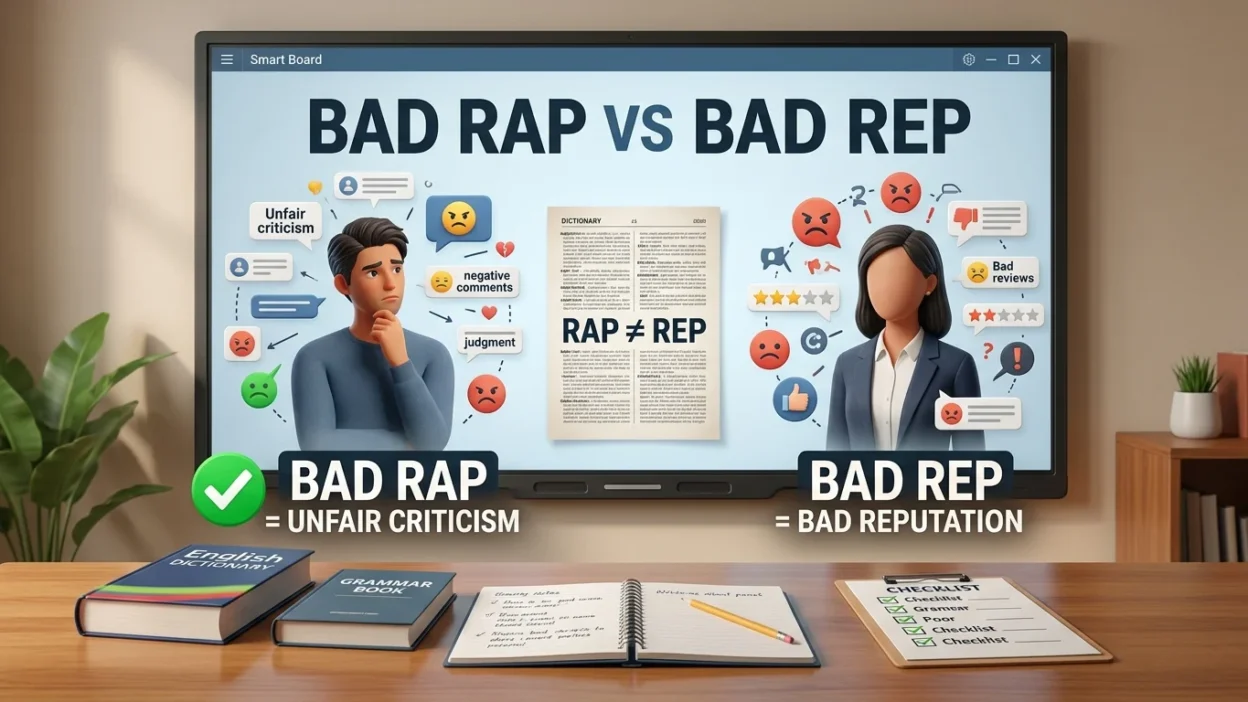
Bad rap means an unfairly negative reputation, criticism, or judgment. It often suggests that someone or something has been given a negative reputation that may not be deserved.
Bad rep is a shortened form of bad reputation. It simply means that someone or something has a poor or negative reputation.
- Bad rap → often emphasizes unfair criticism or an undeserved negative reputation.
- Bad rep → simply means a bad reputation.
- Both are used in informal English.
- Bad reputation is the clearest and most formal option.
Bad Rap Meaning
The expression bad rap refers to an unfairly negative reputation or an unfavorable judgment. When someone gets a bad rap, the implication is often that people have judged that person or thing too harshly or unfairly.
For example:
- This neighborhood gets a bad rap, but it is actually quite peaceful.
- The restaurant has gotten a bad rap because of a few old reviews.
- He gets a bad rap at work even though he is one of the most reliable employees.
The important idea behind bad rap is not simply that something is disliked. It often suggests unfair criticism, an undeserved reputation, or a negative perception that does not tell the whole story.
What Does Get a Bad Rap Mean?
Get a bad rap is one of the most common forms of the expression.
It means to receive an unfairly negative reputation or to be criticized more than you deserve.
For example:
- Online learning sometimes gets a bad rap.
- Introverted people can get a bad rap because they are quiet.
- The product gets a bad rap, although many customers are satisfied with it.
In these examples, the speaker is suggesting that the negative reputation may not be completely justified.
Bad Rep Meaning
Bad rep is an informal shortened form of bad reputation. Here, rep is short for reputation.
For example:
- That company has a bad rep for poor customer service.
- The school has a bad rep in the local community.
- He has a bad rep for being difficult to work with.
Unlike bad rap, bad rep does not necessarily imply that the negative reputation is unfair. It simply describes a poor reputation.
Someone can have a bad rep because of repeated behavior, poor service, negative reviews, or other factors.
Bad Rap vs Bad Rep: Key Difference
The biggest difference is the emphasis.
Bad rap commonly suggests unfair criticism or an undeserved negative reputation.
Bad rep simply means a poor reputation.
Consider these two examples:
- The teacher gets a bad rap.
- The teacher has a bad rep.
The first sentence can suggest that the teacher is unfairly judged. The second simply says that the teacher is known negatively.
However, this distinction is not absolute in everyday conversation. Speakers may use bad rap simply to mean a negative reputation, and bad rep can sometimes carry an implied sense of criticism.
Bad Rap vs Bad Rep Comparison Table
| Expression | Meaning | Main Idea | Formality | Example |
|---|---|---|---|---|
| Bad rap | Unfairly negative reputation or criticism | Often undeserved judgment | Informal | The town gets a bad rap. |
| Bad rep | Bad reputation | Negative public perception | Informal | The company has a bad rep. |
| Bad reputation | Poor reputation | Clearly negative reputation | Neutral/Formal | The company has a bad reputation. |
| Negative reputation | Unfavorable reputation | Negative public perception | Neutral/Formal | The brand has a negative reputation. |
Why Do People Say Bad Rap?
The word rap in bad rap is not referring to rap music. It comes from an older use of rap associated with criticism, blame, or a negative judgment.
Over time, bad rap developed into an expression meaning an unfavorable reputation or unfair criticism.
This is why bad rap is a well-established idiomatic expression rather than simply a creative spelling of bad rep.
A useful phrase to remember is:
get a bad rap
This means to be unfairly criticized or to receive an undeservedly negative reputation.
Is Bad Rep Correct?
Yes, bad rep is understandable and widely used as an informal shortening of bad reputation.
However, it is more conversational than bad reputation. In formal writing, academic writing, business reports, professional documents, or official communication, bad reputation is usually the safer choice.
For example:
- Informal: The company has a bad rep.
- Neutral/formal: The company has a bad reputation.
The second version is clearer and more appropriate for formal contexts.
Common Examples of Bad Rap
Here are natural examples of bad rap:
- Fast food often gets a bad rap for being unhealthy.
- The city gets a bad rap because of its traffic.
- Mathematics gets a bad rap from students who find it difficult.
- Social media gets a bad rap, but it can also be useful for education.
- He got a bad rap after one misunderstanding.
- The profession has received a bad rap in recent years.
These examples focus on negative perceptions that may be incomplete, exaggerated, or unfair.
Common Examples of Bad Rep
Here are examples of bad rep:
- The company has a bad rep for late deliveries.
- That neighborhood has a bad rep after several incidents.
- The restaurant has a bad rep among local customers.
- He has a bad rep for missing deadlines.
- The product has a bad rep online.
- The store developed a bad rep because of poor customer service.
In these sentences, the focus is simply on the negative reputation.
Common Mistakes
1. Thinking Bad Rap Is Related to Rap Music
The expression bad rap does not mean bad rap music. In this idiom, rap has a different historical meaning.
2. Assuming Bad Rep Is Always Wrong
Bad rep is a legitimate informal expression because rep can be used as a shortened form of reputation.
However, use bad reputation when you need a more formal style.
3. Using Bad Rap When You Mean Simple Reputation
Sometimes writers use bad rap when they only mean that something has a poor reputation. This is not necessarily wrong, but bad rep or bad reputation may communicate the idea more directly.
4. Writing Badrep as One Word
Do not normally write badrep. The standard forms are bad rap, bad rep, or bad reputation.
5. Confusing Bad Rap With Bad Wrap
A common mistake is writing bad wrap. The idiom is bad rap.
Wrap refers to covering or enclosing something, while rap in this expression has a different origin.
6. Using Informal Rep in Formal Writing
Although rep is common in casual conversation, reputation is usually preferable in professional or academic writing.
Bad Rap vs Bad Rep in American English
Both expressions are familiar in American English, but bad rap is especially well established as an idiom.
American speakers commonly use expressions such as:
- get a bad rap
- give someone a bad rap
- have a bad rep
- have a bad reputation
For example: - The new teacher gets a bad rap.
- That restaurant has a bad rep.
The choice depends on whether you want to emphasize unfair criticism or simply describe someone’s reputation.
Bad Rap vs Bad Rep in British English
Both expressions can be understood in British English, although bad reputation may be preferred in more formal contexts.
Bad rap is also familiar in British English, especially through widespread exposure to international media and American English.
There is no major spelling difference between American and British English for these expressions. The main difference is one of style, frequency, and context, rather than spelling.
Bad Rap vs Bad Rep: Which Should You Use?
Choose bad rap when you want to suggest that someone or something has been unfairly criticized or judged.
Choose bad rep when you simply want to say that someone or something has a poor reputation in informal conversation.
Choose bad reputation when you want a clear, neutral, or formal expression.
Quick Memory Tip
Think of it this way:
- Bad rap = bad criticism or unfair judgment
- Bad rep = bad reputation
- Bad reputation = formal and straightforward
This simple distinction will help you choose the most natural expression.
Synonyms and Related Expressions
Depending on the context, you can replace these expressions with:
- poor reputation
- negative reputation
- unfavorable reputation
- bad name
- negative image
- poor public image
- unfavorable perception
- negative public perception
- unfair criticism
- undeserved criticism
The best synonym depends on whether you are talking about reputation itself or the fairness of the criticism.
FAQs
Is bad rap or bad rep correct?
Both are used, but they do not have exactly the same emphasis. Bad rap often suggests unfair criticism, while bad rep simply means a bad reputation.
Does bad rap mean a bad reputation?
Yes. Bad rap can mean a negative reputation, especially when the reputation is considered unfair or undeserved.
Is bad rep short for bad reputation?
Yes. Rep is an informal shortening of reputation, so bad rep means a bad reputation.
Is bad rap a slang expression?
Bad rap is an informal idiomatic expression. It is common in everyday English but may be replaced by negative reputation or bad reputation in formal writing.
Is bad rep formal English?
No. Bad rep is informal. In formal writing, bad reputation is generally more appropriate.
Is bad rap the same as bad wrap?
No. The established expression is bad rap. Bad wrap is a common mistaken spelling of the idiom.
Can I use bad rap in professional writing?
You can, especially in informal professional communication, but bad reputation is usually clearer and more neutral for formal reports or academic writing.
Which is more natural: bad rap or bad rep?
It depends on the intended meaning. Bad rap is especially natural when discussing unfair criticism, while bad rep is natural when simply describing a negative reputation.
Summary
Bad rap and bad rep are similar expressions, but they are not completely interchangeable in meaning. Bad rap commonly suggests that someone or something has received unfair criticism or an undeserved negative reputation. Bad rep is an informal shortening of bad reputation and simply describes a poor reputation.
For everyday English, both expressions can be useful. When you want to emphasize unfair judgment, bad rap is a natural choice. When you simply mean a negative reputation, bad rep works well in informal speech and writing. For professional or formal contexts, bad reputation is the clearest option.
Actionable Takeaway
Remember: bad rap = often unfair criticism, while bad rep = bad reputation. When in doubt, especially in formal writing, use bad reputation.