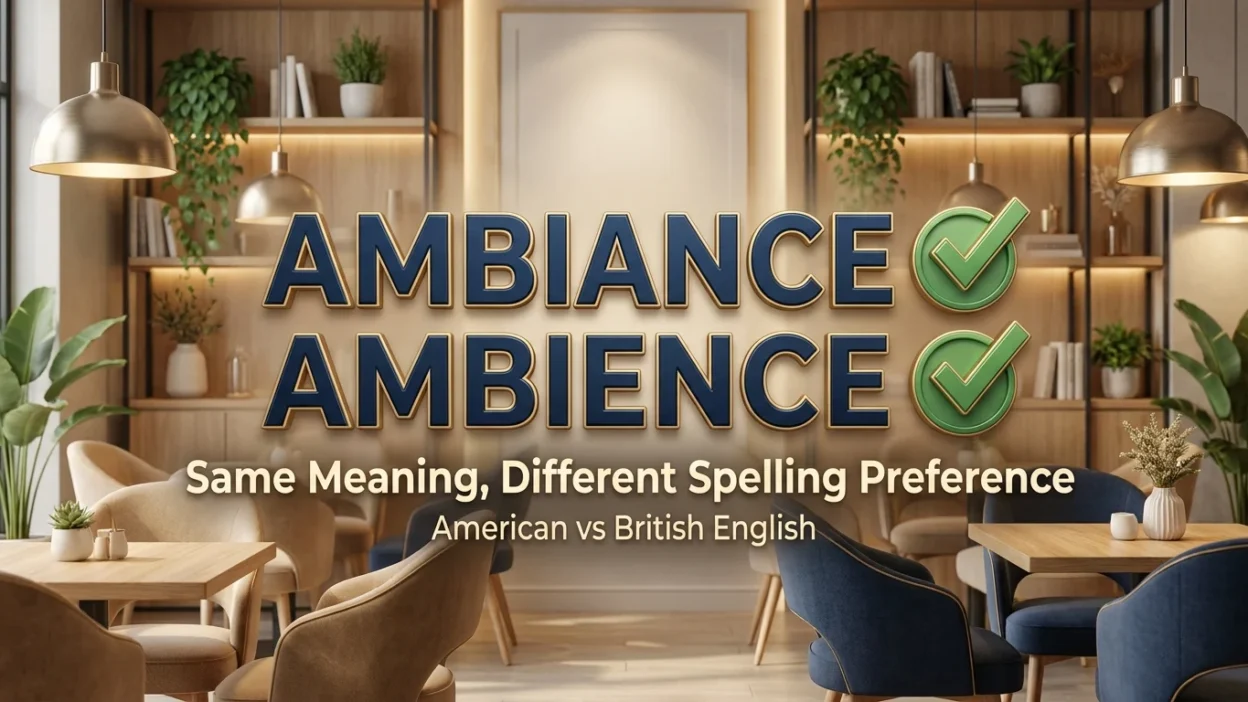
Have you ever wondered whether the correct spelling is “ambiance” or “ambience”? Both words are correct in English, and they have the same basic meaning. They describe the atmosphere, mood, or feeling of a place, such as a cozy restaurant, a peaceful garden, or a lively party. The difference is mainly a matter of spelling preference and regional usage.
Ambiance is especially common in American English, while ambience is often preferred in British English. However, both spellings are understood and used in different varieties of English. You can use either word when describing the mood created by lighting, music, decoration, sounds, or the people in a particular environment. Knowing when each spelling is commonly preferred will help you write more confidently, whether you are preparing a school assignment, writing a restaurant review, or describing a memorable experience.
Quick Answer
Both ambiance and ambience are correct spellings of the same word. They mean the atmosphere or mood of a place or situation. Ambiance is more common in American English, while ambience is traditionally preferred in British English. Their meanings are essentially identical, so choose the spelling that matches your audience or preferred style.
Why Do People Confuse Ambiance and Ambience?
People confuse these words because they differ by only one letter: the final vowel before the ending.
- Ambiance ends in -ance.
- Ambience ends in -ence.
Both spellings refer to the atmosphere or character of an environment. Neither is inherently incorrect, and the difference does not change the word’s meaning.
The confusion often arises when people encounter different spellings in books, websites, restaurant reviews, or travel articles. Someone accustomed to American English may usually see ambiance, while a reader familiar with British English may encounter ambience more frequently.
The easiest solution is to remember that both forms are acceptable and to use one consistently within the same piece of writing.
What Does Ambiance Mean?
Ambiance is a noun that describes the overall atmosphere, mood, or feeling of a place or setting.
It often refers to the combined effect of several elements, including:
- Lighting and colors
- Music and background sounds
- Furniture and decoration
- Temperature and comfort
- The behavior and energy of people
For example, a restaurant with soft lighting, gentle music, and comfortable seating may have a relaxing ambiance.
Examples of Ambiance in Sentences
- The restaurant has a warm and welcoming ambiance.
- Soft lighting creates a romantic ambiance.
- We enjoyed the peaceful ambiance of the garden.
- The hotel’s elegant ambiance impressed the guests.
- The café has a lively ambiance during the evening.
In these sentences, ambiance describes the overall feeling created by the surroundings.
What Does Ambience Mean?
Ambience is also a noun meaning the atmosphere, mood, or character of a place or environment.
It can describe a peaceful room, a busy shopping center, a romantic restaurant, or a quiet library. The word refers to the overall impression that a place creates.
Examples of Ambience in Sentences
- The ambience of the café was calm and inviting.
- Warm colors added to the room’s pleasant ambience.
- The garden has a natural and peaceful ambience.
- We loved the relaxed ambience of the beach resort.
- Candlelight gave the restaurant a romantic ambience.
The meaning in these examples is the same as it would be if ambiance were used instead.
Ambiance vs Ambience: Comparison Table
| Feature | Ambiance | Ambience |
|---|---|---|
| Correct spelling | Yes | Yes |
| Part of speech | Noun | Noun |
| Meaning | Atmosphere or mood | Atmosphere or mood |
| American English | More commonly preferred | Also used |
| British English | Also used | Traditionally preferred |
| Pronunciation | Essentially the same | Essentially the same |
| Example | The ambiance is relaxing. | The ambience is relaxing. |
The main difference is regional spelling preference, not meaning. Both words can describe the same atmosphere.
When Should You Use Ambiance or Ambience?
Your choice depends mainly on your audience, the type of writing, and whether you need to follow a particular style guide.
1. When to Use Ambiance
Choose ambiance when writing for an American English audience or when your preferred style guide uses this spelling.
It works well in:
- Restaurant and hotel reviews
- Travel articles
- Lifestyle blogs
- Marketing descriptions
- Everyday conversations
- General American English writing
Examples:
“The restaurant’s ambiance makes it perfect for a romantic dinner.”
“The hotel offers a luxurious ambiance and excellent service.”
2. When to Use Ambience
Choose ambience when writing for a British English audience or following a style guide that prefers British spelling.
It is suitable for:
- British English essays
- Travel reviews
- Restaurant descriptions
- Professional reports
- General descriptive writing
Examples:
“The ambience of the old library was peaceful.”
“The restaurant’s ambience made the evening special.”
3. Should You Use Both Spellings in One Article?
It is best to choose one spelling and use it consistently throughout an article, report, or website page.
For example, if you use ambiance in the introduction, continue using ambiance in the rest of the article unless you are discussing the alternative spelling itself.
Consistency makes your writing look polished and helps readers follow your chosen style.
12 Examples of Ambiance and Ambience in Sentences
The following examples show how both spellings work in everyday English.
- The restaurant has a beautiful ambiance that attracts many visitors.
- The peaceful ambience of the library helped me concentrate.
- Soft music created a romantic ambiance for the dinner.
- We enjoyed the relaxing ambience of the seaside hotel.
- The café’s cozy ambiance makes it a favorite meeting place.
- The warm lighting improved the room’s ambience.
- The hotel is famous for its luxurious ambiance.
- The garden’s natural ambience made us feel refreshed.
- Candles and flowers gave the room an elegant ambiance.
- The restaurant’s lively ambience made the celebration memorable.
- The quiet ambiance of the countryside was a welcome change from city life.
- The soft music contributed to the comfortable ambience of the spa.
Notice that either spelling can fit each sentence without changing its meaning.
Common Mistakes with Ambiance and Ambience
Although both spellings are correct, writers sometimes misunderstand how to use them.
Mistake 1: Thinking One Spelling Is Wrong
Incorrect claim: “Ambience is always wrong in American English.”
Correct understanding: Both spellings are accepted in English, although ambiance is more commonly associated with American usage.
Similarly, ambiance is not automatically wrong in British English.
Mistake 2: Assuming the Words Have Different Meanings
Incorrect claim: “Ambiance means decoration, while ambience means mood.”
Correct understanding: Both words refer to the atmosphere or overall feeling of a place.
Decoration can contribute to the ambiance or ambience, but neither word means decoration alone.
Mistake 3: Switching Spellings Unnecessarily
Inconsistent: The restaurant has a wonderful ambiance. The ambience attracts many customers.
Better: The restaurant has a wonderful ambiance. Its ambiance attracts many customers.
Why? Consistent spelling makes the text easier to read and gives it a more professional appearance.
Mistake 4: Using the Word for One Object Instead of the Overall Atmosphere
Less precise: The ambiance is a beautiful lamp.
Better: The beautiful lamp contributes to the room’s ambiance.
Why? The word describes the overall atmosphere rather than one individual object.
Mistake 5: Confusing Ambiance with Appearance
A place’s appearance is part of its atmosphere, but the two terms are not identical.
For example, a room may look beautiful but feel uncomfortable because of loud noise or harsh lighting. Its visual appearance may be attractive even if its overall ambiance is unpleasant.
What Is an Easy Memory Trick for Ambiance vs Ambience?
Use this simple memory trick:
Ambiance = American preference.
Both words are correct, but associating ambiance with American English can help you remember which spelling to choose for an American audience.
For British English, remember:
Ambience = traditionally British preference.
You can also remember the shared meaning by connecting both words with the idea of atmosphere.
For example:
- A romantic restaurant has a romantic ambiance.
- A peaceful garden has a peaceful ambience.
The spelling changes, but the meaning stays the same.
Is Ambiance or Ambience American or British English?
The main regional difference is the spelling preference.
American English: Ambiance is more common.
Example: The hotel has a relaxing ambiance.
British English: Ambience is traditionally preferred.
Example: The hotel has a relaxing ambience.
However, these are preferences rather than strict rules. Both forms appear in international English, and readers generally understand either spelling.
If you are writing for a specific publication, university, or business, follow its style guide. Otherwise, choose the version that best matches your intended audience and use it consistently.
What Are Some Similar Words to Ambiance and Ambience?
Several English words describe the atmosphere or feeling of a place. Each has a slightly different emphasis.
| Word | Meaning | Example |
|---|---|---|
| Atmosphere | The overall feeling or character of a place | The atmosphere was friendly. |
| Mood | The emotional feeling of a person or setting | The music created a cheerful mood. |
| Environment | The surroundings or conditions in which something exists | The office provides a comfortable environment. |
| Vibe | The general feeling or impression, often informal | This café has a relaxed vibe. |
| Setting | The place or surroundings in which something happens | The garden was a beautiful setting for the wedding. |
| Character | The distinctive qualities of a place | The old building has plenty of character. |
| Feeling | The emotional impression something creates | The room gave me a feeling of comfort. |
These words overlap with ambiance and ambience, but they are not always interchangeable. For example, environment can refer to physical conditions, while mood often focuses more directly on an emotional state.
Final Verdict: Ambiance or Ambience?
Both ambiance and ambience are correct. They have the same meaning: the atmosphere, mood, or overall feeling of a place or situation.
Use ambiance if you prefer American English spelling. Use ambience if you prefer the traditional British English spelling. Neither form is universally superior, and neither changes the meaning of the sentence.
The most important rule is to choose the spelling that suits your audience and remain consistent throughout your writing.
FAQs
1. Is ambiance or ambience correct?
Both are correct English spellings. Ambiance is more common in American English, while ambience is traditionally preferred in British English.
2. What is the difference between ambiance and ambience?
There is no significant difference in meaning. Both words describe the atmosphere, mood, or character of a place. The main distinction is spelling preference.
3. Is ambiance American or British English?
Ambiance is more commonly associated with American English, although it is also used in British English.
4. Is ambience British or American English?
Ambience is traditionally preferred in British English, but it is understood and used in American English as well.
5. What does ambiance mean in simple English?
Ambiance means the overall feeling or atmosphere of a place. For example, soft lighting and gentle music can create a relaxing ambiance in a restaurant.
6. Can I use ambiance and ambience interchangeably?
Yes. You can generally use either spelling without changing the meaning. However, it is best to use one spelling consistently within the same piece of writing.
7. Is ambiance the same as atmosphere?
They have similar meanings, but their use can differ slightly. Ambiance often describes the overall mood or feeling created by a place, while atmosphere has a broader range of meanings and uses.
Remember This
- Ambiance: Correct spelling, more common in American English.
- Ambience: Correct spelling, traditionally preferred in British English.
- Meaning: Both describe the atmosphere or mood of a place.
- Usage: Either spelling is acceptable; consistency matters.
Conclusion
The choice between ambiance and ambience is mainly a matter of regional spelling preference. Both words describe the atmosphere, mood, or character of a place, whether it is a cozy café, a peaceful garden, or a lively restaurant. You can use either spelling without changing the meaning of your sentence.
For American English, ambiance is generally the more familiar choice. For British English, ambience is traditionally preferred. If you are unsure, select the spelling that matches your audience or style guide and use it consistently. Once you understand this simple distinction, choosing between the two words becomes easy.