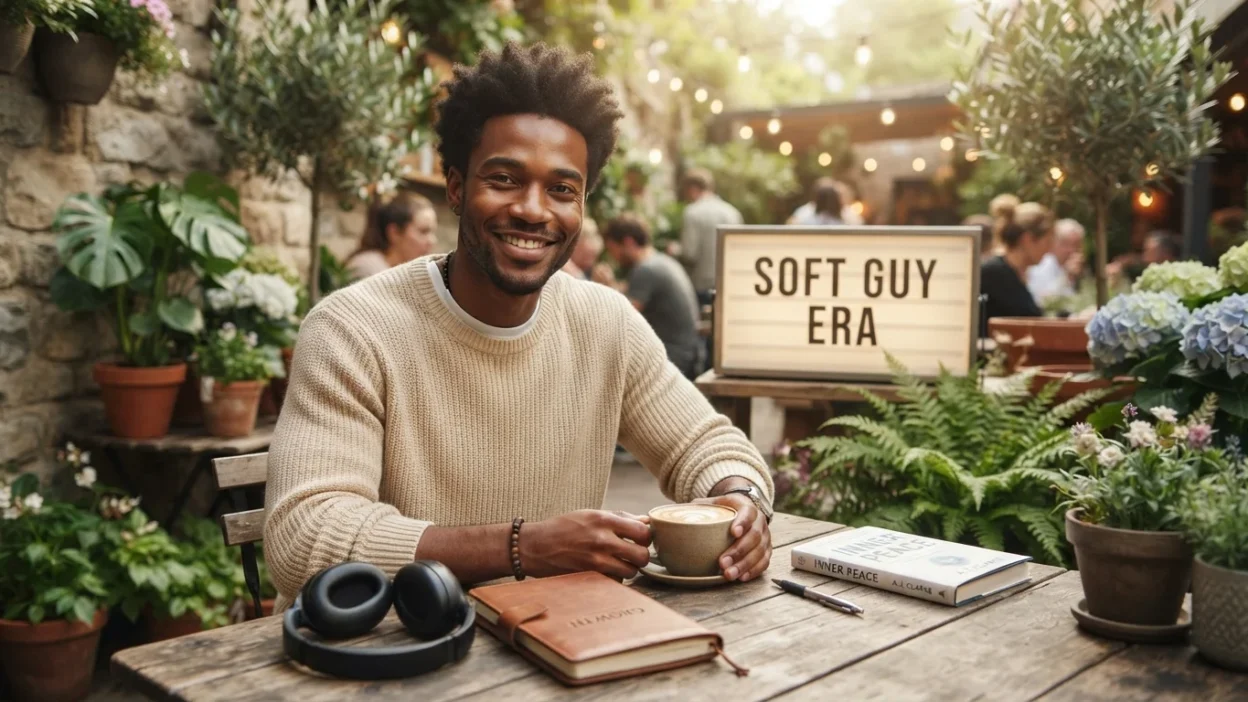
The phrase “soft guy era” has become increasingly popular on social media, especially in conversations about modern masculinity, relationships, emotional openness, and personal growth. If you have seen someone say, “I’m entering my soft guy era,” you may be wondering what they actually mean. Is it about becoming less masculine, being more romantic, or simply living a calmer life?
In most cases, soft guy era describes a period when a man chooses to embrace a gentler, more emotionally open, caring, peaceful, and authentic side of himself. It is often used casually online to describe moving away from emotional suppression, unnecessary toughness, or a constantly competitive lifestyle. The exact meaning can vary depending on the person and the context.
Quick Answer: Soft Guy Era Meaning
Soft guy era generally means a period in a man’s life when he is embracing emotional vulnerability, kindness, affection, self-care, peaceful living, and meaningful relationships.
Someone in their soft guy era may be:
- More open about their feelings
- Comfortable expressing affection
- Interested in healthy relationships
- Prioritizing peace over unnecessary conflict
- Taking better care of their mental and emotional well-being
- Enjoying romantic or sentimental experiences
- Becoming more comfortable with vulnerability
- Moving away from the idea that men must always appear tough
In simple words:
It is usually a positive and playful social media phrase, not a formal psychological or scientific term.
What Does “Soft Guy Era” Mean?
The phrase soft guy era combines two ideas: soft guy and era.
A soft guy generally refers to a man who is comfortable showing his gentle, caring, sensitive, affectionate, or emotionally expressive side.
The word era means a particular period or phase of someone’s life.
Put them together, and soft guy era describes a personal phase in which someone is intentionally embracing a softer approach to life.
For example, a person might previously have focused heavily on work, competition, independence, or appearing emotionally strong. Later, they may decide they want more balance, meaningful connections, relaxation, and emotional honesty.
They might jokingly say:
This could mean:
The phrase does not have one strict definition. Its meaning depends on how the person uses it.
What Does It Mean to Be in Your Soft Guy Era?
Being in your soft guy era can mean different things to different people. However, several themes commonly appear in the phrase.
1. Becoming More Emotionally Open
A person may become more comfortable talking about emotions rather than hiding them.
For example:
This does not mean someone has to share every private thought. It simply suggests being more emotionally honest and comfortable with vulnerability.
2. Prioritizing Peace
Someone in their soft guy era may decide that constant arguments, unnecessary drama, and competition are no longer worth their energy.
They might choose:
- Calm conversations
- Healthy boundaries
- Peaceful relationships
- Personal growth
- A balanced lifestyle
In this context, “soft” does not mean weak. It can mean choosing emotional maturity over unnecessary conflict.
3. Showing Affection
The phrase can also describe becoming more comfortable with affection and romance.
For example, someone might:
- Send thoughtful messages
- Give genuine compliments
- Plan meaningful dates
- Express appreciation
- Be more emotionally present
A person may jokingly post a photo of flowers or a romantic dinner and caption it:
The phrase is often used humorously in this way.
4. Taking Care of Yourself
The soft guy era can also involve self-care and personal well-being.
This might include:
- Getting enough rest
- Spending time with family
- Enjoying hobbies
- Taking breaks from social media
- Spending time in nature
- Creating a peaceful routine
The idea is that someone is allowing themselves to enjoy life rather than constantly feeling pressure to prove themselves.
Soft Guy Era Examples
Here are some examples of how people might use the phrase in everyday conversation and social media.
Example 1: Emotional Growth
Meaning: The person is becoming more comfortable acknowledging and expressing emotions.
Example 2: Romantic Context
Meaning: The person is showing affection and being thoughtful or romantic.
Example 3: Choosing Peace
Meaning: The person wants to avoid unnecessary conflict and prioritize peace.
Example 4: Self-Care
Meaning: The person is enjoying a calm, comfortable lifestyle.
Example 5: Social Media Caption
Here, the phrase is being used playfully to describe a lifestyle focused on self-improvement and well-being.
Soft Guy Era vs Traditional “Tough Guy” Image
The phrase is often used as a contrast to traditional ideas about masculinity.
A traditional “tough guy” image might emphasize:
- Hiding emotions
- Avoiding vulnerability
- Always appearing strong
- Never asking for help
- Avoiding emotional conversations
The soft guy era trend often celebrates the opposite qualities:
- Emotional awareness
- Kindness
- Vulnerability
- Affection
- Communication
- Self-care
- Authenticity
However, the two ideas are not necessarily opposites in real life. A person can be confident, strong, and emotionally open at the same time.
Being emotionally expressive does not automatically make someone weak. In many situations, the ability to communicate feelings and handle emotions constructively can be a sign of maturity.
Soft Guy Era vs Soft Boy: What’s the Difference?
The terms soft guy and soft boy can sometimes overlap, but they are not always used in exactly the same way.
| Term | Common Meaning | Typical Context |
|---|---|---|
| Soft guy era | A phase of embracing kindness, emotions, peace, and vulnerability | Social media and lifestyle discussions |
| Soft guy | A man who is gentle, caring, emotionally open, or affectionate | Personality and relationships |
| Soft boy | Can describe a sensitive or artistic young man, but sometimes has a negative meaning | Dating and internet culture |
| Tough guy | A person who emphasizes strength, toughness, or emotional restraint | Informal descriptions |
| Emotionally open | Comfortable expressing and discussing feelings | General relationship and mental well-being discussions |
The phrase soft guy era is usually more positive and self-reflective. Soft boy, depending on context, can sometimes be used critically to describe someone who appears sensitive or artistic mainly to attract romantic attention.
Is Being a “Soft Guy” a Bad Thing?
No. The phrase is generally positive when someone uses it to describe themselves.
Being caring, emotionally aware, affectionate, or vulnerable is not inherently negative. In healthy relationships, qualities such as empathy, communication, respect, and kindness can be valuable.
At the same time, the term is informal and should not be treated as a scientific personality category. Someone can be emotionally open while also being confident, ambitious, independent, and strong.
The phrase is mainly about how someone chooses to express themselves during a particular phase of life.
Common Mistakes About the Soft Guy Era Meaning
Mistake 1: Thinking “Soft” Means Weak
One of the biggest misunderstandings is assuming that a “soft guy” is necessarily weak.
In social media slang, soft often means gentle, emotionally open, caring, or affectionate. It does not automatically mean lacking confidence or strength.
Mistake 2: Assuming Every Soft Guy Wants a Relationship
Not necessarily.
Someone may describe themselves as being in their soft guy era because they are focusing on:
- Family
- Friendships
- Self-care
- Emotional growth
- Personal peace
Romance is only one possible part of the trend.
Mistake 3: Thinking the Phrase Is a Formal Psychological Term
Soft guy era is internet slang and popular culture language. It is not a recognized psychological diagnosis or formal personality category.
Mistake 4: Assuming There Is Only One Definition
The meaning can change depending on context.
One person may use it to describe becoming more romantic, while another may use it to describe becoming more peaceful and emotionally expressive.
Always consider the surrounding conversation.
American English vs British English
There is no major difference between American and British English in the basic meaning of soft guy era.
The phrase is primarily associated with internet culture and social media, so its meaning is generally understood across English-speaking communities.
However, the phrase may be more common in informal online conversations than in traditional British or American writing.
For example, someone in either variety of English might say:
The phrase is casual and conversational rather than formal.
In both American and British English, you would generally use more conventional language in professional or academic writing, such as:
or:
Why Is the Soft Guy Era Trending?
The popularity of the phrase reflects broader conversations about emotional expression and modern masculinity.
Social media has made it easier for people to openly discuss:
- Emotional vulnerability
- Self-care
- Healthy relationships
- Personal growth
- Work-life balance
- Emotional intelligence
The phrase also has a humorous side. People often use it as a playful caption for ordinary moments, such as reading a book, buying flowers, listening to emotional music, or enjoying a quiet evening.
Because of this, soft guy era can be both sincere and humorous depending on the situation.
FAQs
1. What does soft guy era mean?
Soft guy era means a period when a man embraces a gentler, more emotionally open, caring, peaceful, and authentic side of his personality.
2. Does soft guy era mean being weak?
No. The phrase generally refers to emotional openness, kindness, vulnerability, and self-care. Being emotionally expressive does not automatically mean being weak.
3. Is soft guy era a slang term?
Yes. Soft guy era is primarily an informal internet and social media phrase rather than a formal English expression.
4. What is an example of a soft guy era?
Someone might say they are in their soft guy era when they start prioritizing healthy relationships, expressing emotions openly, enjoying peaceful activities, and becoming more comfortable with affection.
5. Is soft guy era only about romance?
No. Romance can be part of it, but the phrase can also refer to emotional growth, self-care, friendships, family, peace, and personal development.
6. What is the difference between soft guy and soft boy?
A soft guy generally describes someone who is gentle, caring, or emotionally open. Soft boy can have a similar meaning, but in some online dating contexts, it may also describe someone who performs sensitivity or artistic behavior to attract others.
7. Is soft guy era used in American and British English?
Yes. The phrase can be understood in both American and British English. It is mainly an informal social media expression rather than a regional English term.
8. Can someone be both strong and soft?
Absolutely. Emotional openness and personal strength are not opposites. Someone can be confident, ambitious, resilient, and emotionally expressive at the same time.
Final Summary
The soft guy era meaning is generally connected to a period of emotional openness, kindness, vulnerability, affection, peace, and personal growth. When someone says they are entering their soft guy era, they are often saying that they are becoming more comfortable with expressing emotions and showing a gentler side of themselves. The phrase can also describe enjoying a calmer lifestyle, prioritizing healthy relationships, or simply letting go of the pressure to always appear tough.
At the same time, soft guy era is a flexible internet slang phrase rather than a strict definition of personality or masculinity. Different people use it in different ways, and the meaning depends on context. For some, it may mean becoming more romantic; for others, it may mean focusing on self-care, emotional intelligence, or a peaceful life. Ultimately, the trend reflects a broader idea that kindness and emotional honesty can coexist with confidence and strength.