Have you ever ended a productive or memorable day and thought, “It was a day well spent”? This common English expression is often used to reflect on a day that felt meaningful, enjoyable, or worthwhile.
If you spent time with family, completed an important project, or simply relaxed after a busy week, saying it was a day well spent expresses satisfaction and fulfillment.
If you’re unsure about day well spent usage, you’re not alone. Many English learners wonder when to use the phrase, whether it’s grammatically correct, and how it differs from similar expressions like time well spent or a day well spent.
In this guide, you’ll learn its meaning, grammar, examples, common mistakes, and tips for using it naturally in both spoken and written English.
Quick Answer
Day well spent is a correct and widely used English expression that describes a day that was used in a meaningful, enjoyable, productive, or satisfying way.
Examples:
- It was a day well spent with my family.
- After finishing the project, I felt it was a day well spent.
- Hiking in the mountains made it a day well spent.
The phrase is commonly used in conversations, social media captions, blogs, journals, and everyday writing.
What Does “Day Well Spent” Mean?
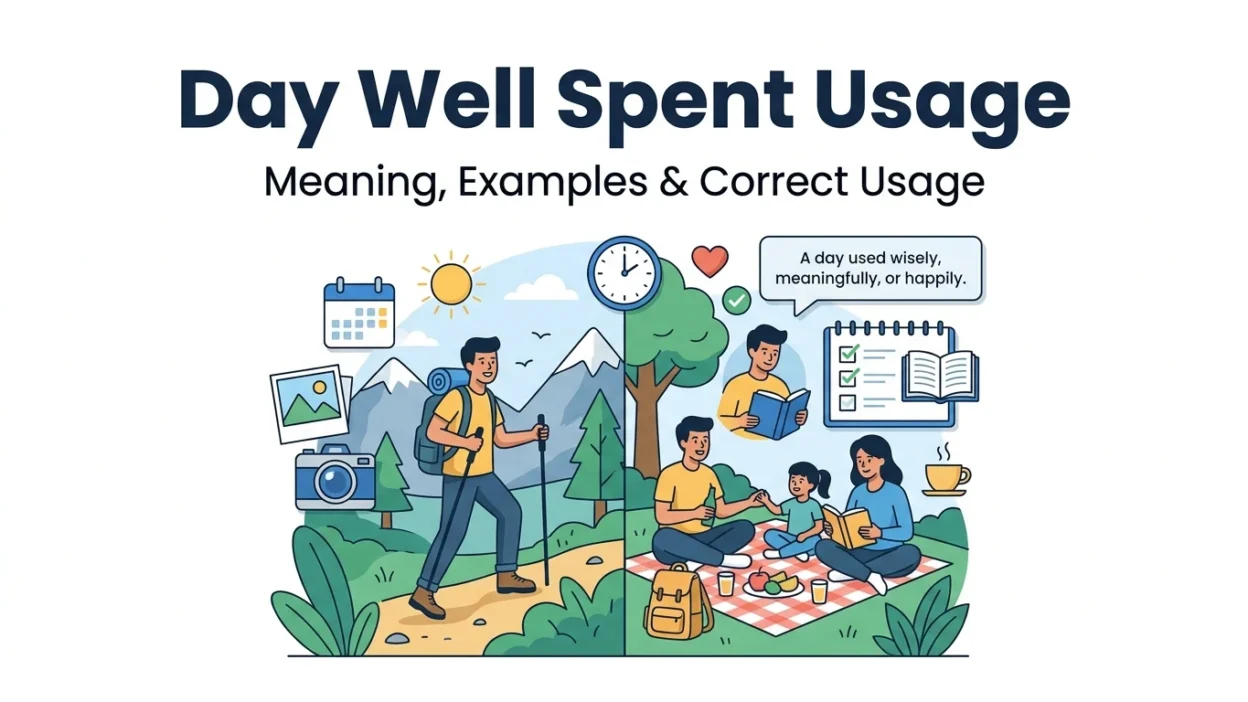
The expression day well spent means that the time you spent during the day was valuable, rewarding, or worthwhile.
It suggests that your activities made the day meaningful or fulfilling rather than wasted.
Simple Definition
Day well spent means:
People often use this phrase after:
- Spending quality time with loved ones
- Completing important work
- Traveling
- Learning something new
- Volunteering
- Relaxing after a stressful period
- Enjoying a memorable experience
Is “Day Well Spent” Grammatically Correct?
Yes.
Day well spent is grammatically correct and widely accepted in both spoken and written English.
The phrase is a shortened form of:
- It was a day well spent.
The word well functions as an adverb modifying spent, describing how the day was spent.
Examples:
- Today was a day well spent.
- Yesterday turned out to be a day well spent.
- Every weekend with my grandparents is a day well spent.
How to Use “Day Well Spent”
You can use the expression in many everyday situations.
After a Productive Day
- Completing an assignment made it a day well spent.
- Cleaning the entire house felt like a day well spent.
After Spending Time with Family
- It was a day well spent with my parents.
- Family picnics are always days well spent.
After Traveling
- Exploring the old city made it a day well spent.
- Every minute at the beach was part of a day well spent.
After Learning Something New
- Taking the photography workshop was a day well spent.
- Reading a great book made today a day well spent.
Examples of “Day Well Spent” in Sentences
Here are natural examples across different situations.
- It was a day well spent with close friends.
- Helping others made it a day well spent.
- After finishing my exams, I felt it was a day well spent.
- Our family outing turned into a day well spent.
- Gardening all afternoon was a day well spent.
- Volunteering at the shelter was a day well spent.
- We laughed, talked, and created memories—a truly well-spent day.
- Every Sunday with my children is a day well spent.
Day Well Spent vs Time Well Spent
Many learners confuse these expressions.
Although they’re similar, they aren’t exactly the same.
| Expression | Meaning | Example |
|---|---|---|
| Day well spent | Refers to an entire day | It was a day well spent. |
| Time well spent | Refers to any amount of time | Reading was time well spent. |
| Evening well spent | Refers to an evening | It was an evening well spent. |
| Weekend well spent | Refers to a weekend | A weekend well spent with family. |
Time well spent is broader, while day well spent specifically refers to one day.
When Should You Use “Day Well Spent”?
This phrase fits many situations.
Use it when describing:
- Family gatherings
- Vacations
- Volunteer work
- Productive workdays
- Educational experiences
- Outdoor adventures
- Celebrations
- Personal achievements
- Relaxing weekends
- Memorable moments
It’s especially popular in personal reflections and social media posts.
Common Social Media Captions
Many people use day well spent as a caption after sharing photos.
Examples include:
- A day well spent with family ❤️
- Sunshine, laughter, and a day well spent.
- Nature always makes for a day well spent.
- Memories created, smiles shared—a day well spent.
- Nothing beats a day well spent with friends.
These captions sound natural and positive.
Common Mistakes to Avoid
Although the phrase is simple, learners often make a few mistakes.
1. Forgetting the Article
Less natural:
- Today was day well spent.
Correct:
- Today was a day well spent.
2. Using “Good Spent”
Incorrect:
- It was a good spent day.
Correct:
- It was a day well spent.
3. Using It for Negative Experiences
The phrase expresses satisfaction.
Avoid using it after unpleasant or unproductive experiences.
Incorrect:
- We argued all day. It was a day well spent.
4. Overusing It
Instead of repeating the same phrase, vary your writing with similar expressions.
Similar Expressions
You can naturally replace day well spent with:
- worthwhile day
- productive day
- fulfilling day
- meaningful day
- rewarding day
- memorable day
- enjoyable day
- successful day
- satisfying day
- time well spent
These alternatives improve variety while maintaining the same positive tone.
American vs British English
The good news is that day well spent is used the same way in both American and British English.
There are no spelling or grammatical differences.
Examples in both varieties:
- It was a day well spent.
- We had a day well spent outdoors.
The expression sounds natural regardless of which variety of English you use.
Tips for Using the Phrase Naturally
Here are a few simple tips.
- Use it after reflecting on a positive experience.
- Pair it with specific details.
- Keep the tone sincere.
- Avoid forcing it into negative contexts.
- Include why the day felt worthwhile.
For example:
Instead of:
- It was a day well spent.
Say:
- It was a day well spent hiking with friends and enjoying fresh mountain air.
The added detail makes the sentence more engaging.
Related Words and LSI Keywords
To make your writing richer and more natural, consider using related terms such as:
- meaningful day
- productive day
- rewarding experience
- quality time
- memorable moments
- fulfilling activities
- worthwhile experience
- enjoyable day
- positive memories
- valuable time
- satisfying experience
- cherished moments
These naturally support the main keyword without sounding repetitive.
FAQs
Is “day well spent” grammatically correct?
Yes. It is a correct and commonly used English expression that describes a worthwhile or satisfying day.
Should I say “day well spent” or “a day well spent”?
Both are used, but a day well spent is more natural in complete sentences.
Can I use “day well spent” as an Instagram caption?
Absolutely. It is one of the most popular captions for photos featuring travel, family, friends, or special moments.
Is “day well spent” formal or informal?
It works in both formal and informal writing, although it’s especially common in personal reflections, blogs, and social media.
Does American English use “day well spent”?
Yes. Both American and British English commonly use this expression.
What is another way to say “day well spent”?
You can say:
- productive day
- fulfilling day
- worthwhile day
- memorable day
- rewarding day
Can I use it after relaxing all day?
Yes. If the relaxation felt beneficial or refreshing, calling it a day well spent is perfectly natural.
Summary
Understanding day well spent usage is straightforward once you know what the expression conveys. It describes a day that feels meaningful, productive, enjoyable, or rewarding. Whether you’ve spent time with loved ones, completed an important goal, explored a new place, or simply enjoyed a peaceful break, saying it was a day well spent communicates a sense of satisfaction and gratitude.
This expression is widely used in both American and British English and fits naturally into conversations, journals, blogs, social media captions, and professional writing. By pairing it with specific experiences and using it in positive contexts, you can make your English sound more authentic and expressive.
Actionable Takeaway
The next time you reflect on a fulfilling day, don’t just say it was “good.” Instead, describe why it was a day well spent. Adding details about what made the day special will make your writing and conversations more meaningful, relatable, and memorable.