
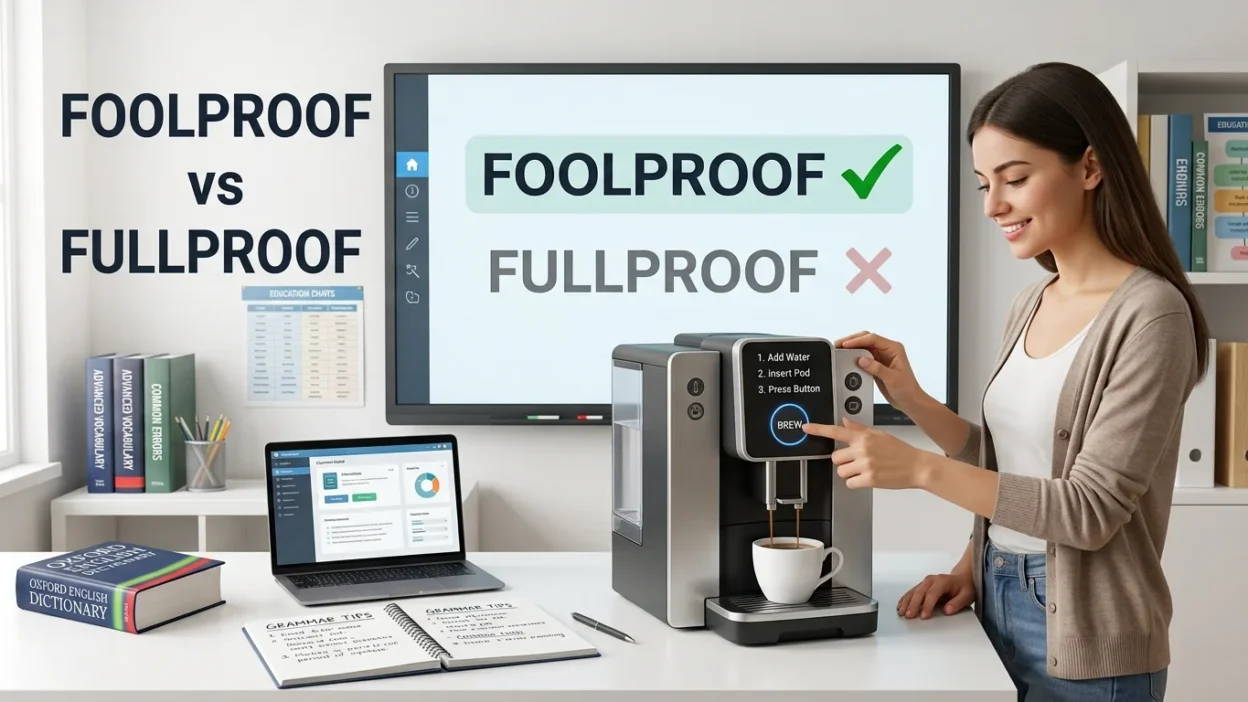
If you have ever wondered whether the correct spelling is foolproof or fullproof, you are not alone. These two forms look similar, and fullproof may seem logical because something that works perfectly might appear to be full of proof. However, English uses a different expression for this meaning.
The correct word is foolproof. It describes something designed to be extremely easy to use, understand, or operate, with very little chance of failure or error. Fullproof is not the standard spelling when you mean something reliable or almost impossible to get wrong. This guide explains the difference between foolproof vs fullproof, with meanings, examples, synonyms, common mistakes, and useful grammar tips.
Quick Answer
Foolproof is the correct word when you mean very reliable, extremely simple, or unlikely to fail or be done incorrectly.
Fullproof is generally an incorrect spelling when used with this meaning.
Correct:
The instructions are foolproof.
Incorrect:
The instructions are fullproof.
The word foolproof is made from:
fool + proof
It literally suggests something that is designed to prevent even an inexperienced or careless person from making a mistake.
What Does Foolproof Mean?
Foolproof is an adjective used to describe something that is so simple, reliable, or well designed that it is very difficult to fail or use incorrectly.
For example:
This recipe is foolproof.
This means the recipe is easy to follow and is unlikely to go wrong, even for someone with limited cooking experience.
Another example:
The company developed a foolproof security system.
This suggests that the system is highly reliable and difficult to misuse or defeat.
The word can describe:
- Instructions
- Methods
- Plans
- Systems
- Machines
- Procedures
- Recipes
- Strategies
- Solutions
- Designs
What Does Fullproof Mean?
Fullproof is generally not the standard English word when you want to describe something reliable, safe, or almost impossible to get wrong.
Many people write fullproof because they associate the word with phrases such as full proof or proof.
However, when the intended meaning is something that cannot easily fail or be done incorrectly, the correct word is:
foolproof
For example:
The system is foolproof.
Not:
The system is fullproof.
Foolproof vs Fullproof Comparison
| Word | Correct? | Meaning | Example |
|---|---|---|---|
| Foolproof | Yes | Very reliable or difficult to get wrong | This method is foolproof. |
| Fullproof | No, for this meaning | Usually a spelling mistake | Avoid this spelling. |
| Full proof | Possible in literal contexts | Complete or sufficient proof | The evidence provided full proof of the claim. |
The important distinction is that foolproof is a standard adjective, while fullproof is generally a mistaken spelling when used to mean reliable or fail-safe.
Why Is It Called Foolproof?
The word foolproof combines:
fool + proof
The idea is that something is designed so carefully that even someone who does not understand it well should be able to use it successfully.
The word does not necessarily mean that the user is foolish.
For example:
The software has a foolproof installation process.
This simply means the installation process is designed to minimize mistakes.
It is often used to emphasize simplicity and reliability.
Examples of Foolproof
Here are some natural examples:
- This recipe is foolproof.
- We need a foolproof plan before starting the project.
- The instructions are simple and foolproof.
- She developed a foolproof method for organizing the files.
- The machine has a foolproof safety mechanism.
- There is no completely foolproof solution.
- He created a foolproof system for tracking expenses.
- The teacher gave the students a foolproof method for solving the problem.
These examples show that foolproof can describe both practical systems and ideas.
Foolproof Meaning in Everyday English
In everyday conversation, foolproof often means something is very easy to do successfully.
For example:
This app is foolproof.
The speaker means the app is easy to use and difficult to operate incorrectly.
Similarly:
Do you have a foolproof way to remember new vocabulary?
This means the speaker wants a highly reliable method.
Foolproof vs Fail-Safe
Foolproof and fail-safe are related but not identical.
Foolproof focuses mainly on preventing human mistakes or making something extremely easy to use.
Fail-safe refers to a system designed to remain safe or minimize harm if something goes wrong.
Compare:
The instructions are foolproof.
The instructions are easy to follow.
The machine has a fail-safe mechanism.
The machine is designed to enter a safe condition if a failure occurs.
Both words describe reliability, but they focus on different aspects.
Foolproof vs Reliable
Reliable means something can generally be trusted to work properly or consistently.
Foolproof is stronger and more specific.
For example:
This car is reliable.
The car usually works well.
This procedure is foolproof.
The procedure is designed to be extremely difficult to perform incorrectly.
Something can be reliable without being foolproof.
Foolproof vs Perfect
These words should not be treated as exact synonyms.
Perfect means having no faults or defects.
Foolproof means designed to minimize errors or failure.
For example:
The plan is foolproof.
This suggests the plan is highly reliable.
It does not necessarily mean the plan is literally perfect.
In fact, the phrase completely foolproof can sometimes be used for emphasis, even though absolute reliability is rarely guaranteed in real life.
Common Mistakes With Foolproof
Mistake 1: Writing Fullproof
This is the most common mistake.
Incorrect:
We need a fullproof solution.
Correct:
We need a foolproof solution.
Mistake 2: Writing Fool Proof
The standard adjective is normally written as one word:
foolproof
Not:
fool proof
When used as the adjective meaning extremely reliable or easy to use, foolproof is one word.
Mistake 3: Assuming Foolproof Means Impossible to Fail
Although foolproof suggests very high reliability, it does not necessarily mean literally impossible to fail.
For example:
There is no foolproof way to predict the future.
This means no method can guarantee complete success.
Mistake 4: Thinking Foolproof Is an Insult
The word comes from the idea of designing something so simple that even an inexperienced person can use it successfully.
Calling a system foolproof does not necessarily mean calling its users fools.
It usually focuses on the design rather than the person.
Is Foolproof Formal or Informal?
Foolproof is widely understood and acceptable in standard English.
It can be used in:
- Everyday conversation
- Business writing
- Technical writing
- Instructions
- Articles
- Educational material
- Professional communication
However, in highly formal contexts, words such as robust, reliable, error-resistant, or fail-safe may sometimes be more precise.
The best choice depends on the intended meaning.
Foolproof Synonyms
Depending on the context, synonyms and related expressions include:
- Reliable
- Fail-safe
- Error-proof
- Dependable
- Secure
- Simple
- Easy to use
- Robust
- Certain
- Effective
- Guaranteed
These words are not always exact replacements.
For example, robust can describe a system that performs well under difficult conditions, while foolproof emphasizes resistance to human error.
American vs British English
There is no major spelling difference between American and British English for foolproof.
Both varieties use:
foolproof
The incorrect form fullproof is not the standard spelling in either variety when the intended meaning is highly reliable or difficult to get wrong.
The word is widely understood in both American and British English.
Foolproof in Professional Writing
You can use foolproof in professional writing when the tone and context are appropriate.
For example:
The company developed a foolproof procedure for checking customer records.
However, if you are writing a highly technical document, you may prefer a more precise expression.
For example:
The system is designed to minimize user error.
This may be more objective than calling the system foolproof.
How to Remember Foolproof
Here is an easy memory trick:
FOOL + PROOF = FOOLPROOF
Think of the word as describing something that is designed to prevent even an inexperienced person from making a mistake.
Do not think:
FULL + PROOF = FULLPROOF
The standard word is connected to fool, not full.
A simple sentence can help you remember it:
This method is foolproof.
If you remember that sentence, the spelling becomes much easier.
FAQs
1. Is it foolproof or fullproof?
The correct word is foolproof when you mean something that is very reliable or difficult to get wrong. Fullproof is generally a spelling mistake in this context.
2. What does foolproof mean?
Foolproof means designed to be extremely easy to use or understand and unlikely to fail because of human error.
3. Is foolproof one word?
Yes. The standard adjective is written as one word: foolproof.
4. Is fullproof a real word?
Fullproof is not the standard English spelling for the meaning people usually intend. If you mean reliable or difficult to get wrong, use foolproof.
5. Is foolproof the same as fail-safe?
Not exactly. Foolproof focuses on preventing mistakes, while fail-safe focuses on keeping a system safe when something goes wrong.
6. Can foolproof mean perfect?
Not exactly. Foolproof means highly reliable or resistant to mistakes. It does not necessarily mean literally perfect.
7. Is foolproof used in American and British English?
Yes. Foolproof is standard and widely understood in both American and British English.
8. What is another word for foolproof?
Depending on the context, you can use reliable, dependable, fail-safe, robust, error-resistant, or easy to use.
Summary
The difference between foolproof vs fullproof is straightforward: foolproof is the correct standard English word when you mean something highly reliable, easy to use, or difficult to get wrong. The word combines fool and proof, expressing the idea that a design or method can prevent mistakes even when used by an inexperienced person.
Fullproof is generally an incorrect spelling when used with this meaning. Although you may encounter it online or in informal writing, it should be avoided in professional, academic, educational, and carefully edited content. Remember that foolproof is one word, not fool proof, and it is used in both American and British English.