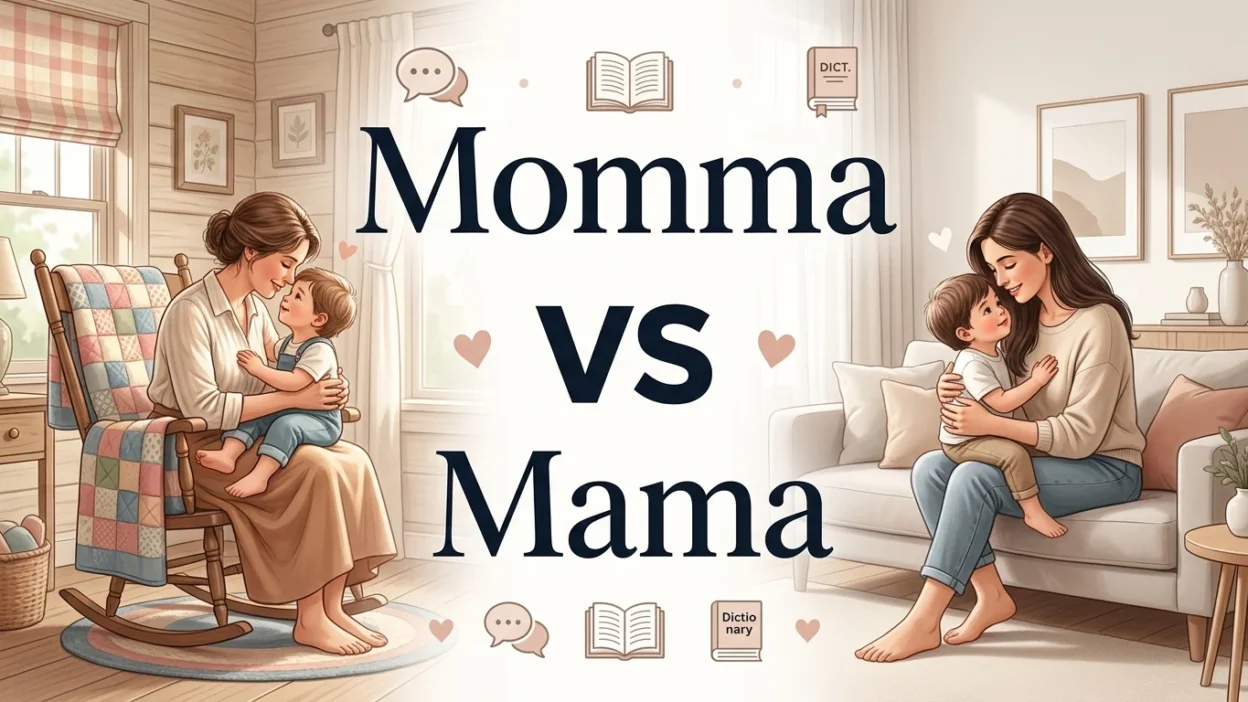
If you’ve ever wondered about momma vs mama, you’re not alone. These two words appear everywhere—from everyday conversations and text messages to books, songs, and social media.
At first glance, they seem interchangeable, but there are subtle differences in tone, usage, and regional preference that are worth understanding.
If you’re writing a heartfelt message, creating content, or simply trying to choose the right word, this guide explains everything you need to know about momma vs mama.
You’ll learn their meanings, when to use each one, common mistakes to avoid, and whether American or British English prefers one over the other.
Quick Answer
The main difference between momma and mama is style and emotional tone.
- Mama is the more common and widely accepted spelling across English-speaking countries.
- Momma is an informal variation, especially popular in American English, often used to express affection, warmth, or Southern cultural identity.
- Both words mean mother, but momma tends to sound more personal, emotional, and conversational.
What Does “Mama” Mean?
Mama is one of the oldest and most universal words for mother. Babies often say “mama” naturally because the sound is easy to pronounce. Over time, the word became a common and affectionate way to refer to a mother.
People use mama in many situations:
- Talking directly to their mother
- Writing greeting cards
- Children’s books
- Songs and poems
- Everyday conversations
Examples
- Mama, can you help me with my homework?
- My mama always gives the best advice.
- She called her mama every Sunday.
The word feels loving, gentle, and familiar without being overly informal.
What Does “Momma” Mean?
Momma has exactly the same basic meaning as mama—it refers to one’s mother. However, its emotional tone is often stronger.
The spelling momma is especially common in:
- Southern United States
- Family storytelling
- Country music
- Informal writing
- Personal blogs
- Dialogue in novels
Many people choose momma because it reflects the way they naturally pronounce the word.
Examples
- My momma taught me to be kind.
- Momma always knew how to make everything better.
- I miss my momma every day.
The word often conveys deep affection, nostalgia, and closeness.
Momma vs Mama: Comparison Table
| Feature | Mama | Momma |
|---|---|---|
| Meaning | Mother | Mother |
| Formality | Informal but widely accepted | More informal |
| Emotional Tone | Warm and affectionate | Very affectionate and personal |
| American English | Very common | Common, especially in the South |
| British English | More common | Rare |
| Common in Writing | Yes | Mostly dialogue and informal writing |
| Regional Preference | Worldwide | Primarily United States |
Is Momma or Mama Correct?
Both are correct.
The right choice depends on your audience and writing style rather than grammar.
Choose mama when:
- Writing for a general audience
- Creating educational content
- Writing professionally with a warm tone
- Using internationally understood English
Choose momma when:
- Writing personal stories
- Reproducing spoken dialogue
- Reflecting Southern American speech
- Adding emotional warmth or authenticity
Neither spelling is grammatically wrong.
American vs British English
There is a noticeable regional difference.
American English
Both mama and momma are commonly understood.
- Mama appears in everyday speech, parenting articles, and children’s literature.
- Momma is especially popular in Southern American English and appears frequently in country music, novels, and family conversations.
British English
British English rarely uses momma.
Instead, people are more likely to say:
- Mum
- Mummy
- Mama (occasionally, especially in literary or affectionate contexts)
For an international audience, mama is generally the safer choice.
Why Do People Say Momma Instead of Mama?
Language often reflects culture and family traditions.
People may say momma because:
- That’s how their family has always spoken.
- Their regional accent naturally sounds like “momma.”
- It creates a stronger emotional connection.
- It reflects Southern American culture.
In many families, the spelling simply mirrors pronunciation.
Common Situations Where Each Word Is Used
Use “Mama” for:
- Greeting cards
- Children’s stories
- Parenting blogs
- General online content
- Educational materials
- International audiences
Examples:
- Happy Birthday, Mama!
- Mama knows best.
- I love my mama.
Use “Momma” for:
- Family memories
- Personal essays
- Fictional dialogue
- Country songs
- Southern American settings
Examples:
- My momma raised me to respect everyone.
- Momma always had fresh cookies waiting.
- I miss my momma’s hugs.
Common Mistakes to Avoid
Many writers accidentally misuse these words. Here are the most common errors.
1. Thinking One Is Incorrect
Both mama and momma are legitimate spellings.
2. Mixing Spellings in the Same Article
Choose one spelling and stay consistent unless you’re intentionally comparing them.
3. Assuming Momma Is Formal
Although acceptable, momma sounds more conversational and regional.
4. Ignoring Your Audience
If your readers come from different countries, mama is generally easier for everyone to recognize.
5. Treating Them as Different Family Roles
They mean exactly the same thing.
The difference is style—not meaning.
Examples in Everyday Sentences
Mama Examples
- Mama makes the best homemade soup.
- I called my mama after work.
- Mama always encouraged me to follow my dreams.
- Thank you, Mama, for everything you’ve done.
- My little sister cried for her mama.
Momma Examples
- My momma taught me to never give up.
- Momma always believed in me.
- I still remember my momma’s cooking.
- Momma hugged me before school every morning.
- Everyone loved my momma.
Which Word Is Better for Writing?
If you’re creating online content, mama generally performs better because it has broader international recognition.
However, momma can work well when:
- Targeting American readers
- Writing emotional stories
- Covering Southern culture
- Quoting dialogue
For comparison articles like this one, naturally using both terms improves topical relevance and helps cover related search intent.
Related Words and Synonyms
Here are other affectionate words people use for mother:
- Mom
- Mother
- Mum
- Mummy
- Mommy
- Momma
- Mama
- Ma
- Mam
- Amma
- Mommy Dearest (context-specific)
Each term reflects different cultures, regions, and family traditions.
When Should You Choose Mama?
Choose mama if you want your writing to sound:
- Natural
- Universal
- Warm
- Reader-friendly
- Suitable for global audiences
It works well in blogs, educational articles, parenting websites, and personal messages.
When Should You Choose Momma?
Choose momma when you want your writing to sound:
- Emotional
- Personal
- Southern American
- Nostalgic
- Conversational
It often creates a stronger feeling of family closeness.
FAQs
Is momma the same as mama?
Yes. Both words mean mother. The difference lies in spelling, tone, and regional preference rather than meaning.
Which spelling is more common?
Mama is more widely used around the world, while momma is especially common in the United States, particularly in Southern regions.
Is momma grammatically correct?
Yes. Momma is a correct informal spelling that appears in books, songs, conversations, and personal writing.
Do British people say momma?
Not usually. British English more commonly uses mum, mummy, or occasionally mama.
Should I use mama or momma in a greeting card?
Either is fine. Use whichever reflects your family’s tradition or how your mother prefers to be addressed.
Why do many songs use momma?
Many songwriters choose momma because it sounds more emotional, personal, and authentic, especially in country, blues, and folk music.
Can I use both spellings in one article?
Yes, but only when comparing them. Otherwise, stick with one spelling to maintain consistency.
Summary
The debate over momma vs mama isn’t about right or wrong—it’s about style, culture, and personal preference.
Both words lovingly refer to a mother, but mama is the more universal spelling, while momma carries a stronger sense of warmth, family tradition, and Southern American identity.
Understanding the context helps you choose the version that feels most natural for your audience.
When writing for a broad readership, mama is usually the best option because it is widely recognized across English-speaking countries.
If you’re telling a personal story, writing authentic dialogue, or capturing regional speech, momma may better express the emotional connection you’re trying to convey. The most important thing is to stay consistent and choose the spelling that matches your purpose.
Actionable Takeaway
Before writing, think about your audience and the tone you want to create. Use mama for universal, reader-friendly communication and momma for informal, heartfelt, or distinctly American contexts. Making the right choice will help your writing feel more natural, authentic, and relatable.