The phrase I am very much looking forward is common in English, especially in emails, letters, professional communication, and conversations about future events. However, many learners wonder whether the phrase is grammatically complete, what should come after it, and whether it sounds natural.
The good news is that the expression is correct when followed by the appropriate complement, most commonly to + noun or to + verb ending in -ing. In this guide, we will explain the meaning of I am very much looking forward, show you how to use it naturally, compare it with similar expressions, and cover the mistakes learners often make.
Quick Answer: What Does I Am Very Much Looking Forward Mean?
I am very much looking forward to… means I am really excited about or eagerly anticipating something that will happen in the future.
For example:
I am very much looking forward to the holidays.
This means the speaker is very excited about the upcoming holidays.
You can also say:
I am very much looking forward to meeting you.
Here, the speaker is expressing strong anticipation about meeting the other person.
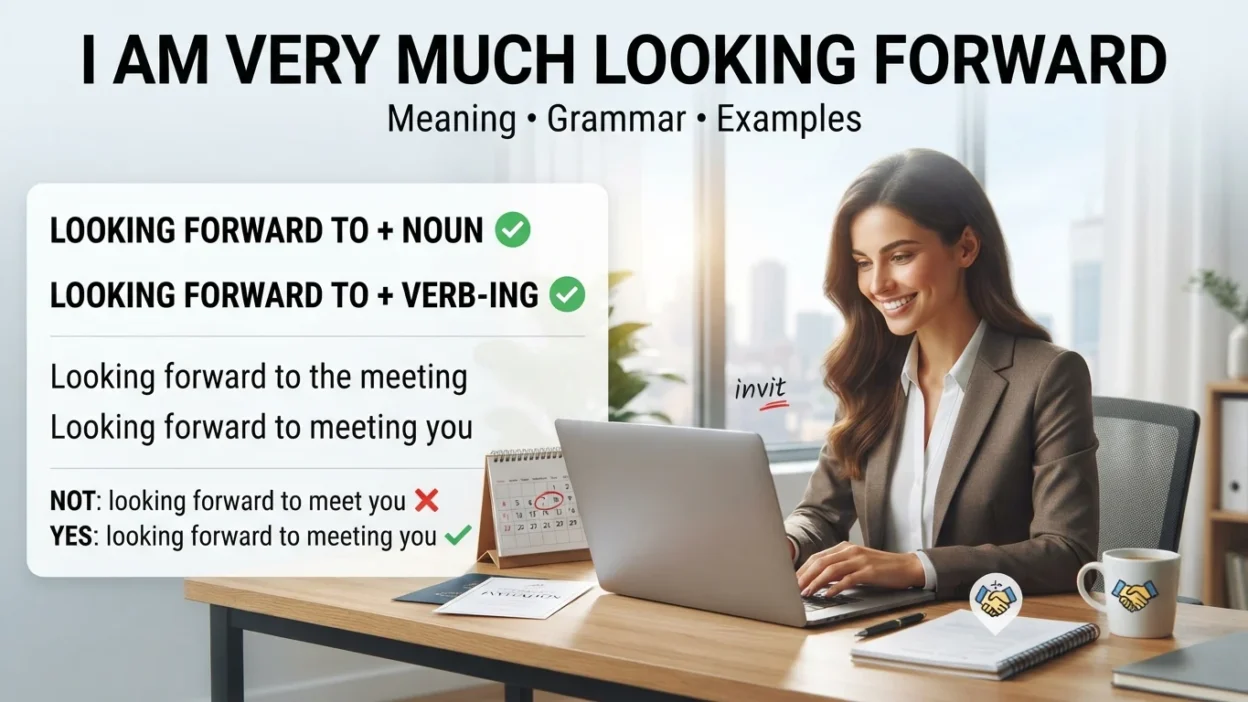
The important grammar rule is that looking forward to is followed by a noun, pronoun, or gerund (-ing form).
What Does I Am Very Much Looking Forward Mean?
The expression I am very much looking forward to is a polite and enthusiastic way to say that you are excited about something that is expected to happen.
The phrase look forward to already expresses anticipation. Adding very much strengthens that feeling.
For example:
I am looking forward to the event.
This expresses anticipation.
I am very much looking forward to the event.
This expresses stronger enthusiasm.
The phrase is especially useful when you want to sound warm, positive, and polite.
Is I Am Very Much Looking Forward Correct?
Yes, I am very much looking forward to is grammatically correct.
However, the phrase is normally incomplete when it ends at looking forward.
You generally need to mention what you are anticipating.
Correct:
I am very much looking forward to the meeting.
I am very much looking forward to seeing you.
I am very much looking forward to your reply.
Incomplete:
I am very much looking forward.
The last version does not normally communicate a complete thought because the reader expects to know what you are looking forward to.
The Grammar of Looking Forward To
One of the most important grammar points is the word to.
In look forward to, the word to is a preposition, not the infinitive marker used in phrases such as to go or to see.
Therefore, when a verb follows it, use the -ing form.
Correct:
I am looking forward to meeting you.
Incorrect:
I am looking forward to meet you.
Correct:
I am very much looking forward to hearing from you.
Incorrect:
I am very much looking forward to hear from you.
This is one of the most common mistakes with this expression.
I Am Very Much Looking Forward To + Noun
You can use a noun after to when talking about an upcoming event, occasion, object, or situation.
Examples:
I am very much looking forward to the conference.
I am very much looking forward to the weekend.
I am very much looking forward to my vacation.
I am very much looking forward to the celebration.
I am very much looking forward to your visit.
In each example, the speaker is expressing strong anticipation.
I Am Very Much Looking Forward To + Verb-ing
When a verb follows to, use the -ing form.
Examples:
I am very much looking forward to meeting you.
I am very much looking forward to working with your team.
I am very much looking forward to seeing the new office.
I am very much looking forward to hearing your ideas.
I am very much looking forward to visiting your city.
This construction is particularly common in professional emails.
I Am Very Much Looking Forward to Hearing From You
One of the most common uses appears at the end of an email or letter.
For example:
I am very much looking forward to hearing from you.
This means that the writer is eagerly waiting for a response.
A slightly simpler version is:
I look forward to hearing from you.
Both are correct.
However, I am very much looking forward to hearing from you sounds more enthusiastic and personal.
I Am Very Much Looking Forward to Meeting You
This phrase is especially common when arranging a meeting, interview, appointment, or introduction.
For example:
Thank you for the invitation. I am very much looking forward to meeting you.
It communicates enthusiasm while remaining polite and professional.
You can also say:
We are very much looking forward to meeting you.
This is useful when speaking on behalf of a group or organization.
Comparison With Similar Expressions
| Expression | Meaning | Tone |
|---|---|---|
| I look forward to… | Anticipate something positively | Professional and polite |
| I am looking forward to… | Feel positive anticipation | Natural and friendly |
| I am very much looking forward to… | Feel strong anticipation | Warm and enthusiastic |
| I can’t wait to… | Be extremely eager | Informal |
| I am excited about… | Feel enthusiasm | Friendly and direct |
| I eagerly anticipate… | Expect something with strong interest | Very formal |
The best choice depends on your audience and situation.
I Look Forward To vs I Am Looking Forward To
These two expressions are very similar.
I look forward to meeting you.
This is common in formal and professional communication.
I am looking forward to meeting you.
This often sounds slightly warmer and more conversational.
Both are grammatically correct.
The addition of very much makes the second structure more enthusiastic:
I am very much looking forward to meeting you.
I Am Very Much Looking Forward vs I Can’t Wait
These expressions communicate similar feelings, but their tone is different.
I am very much looking forward to the trip.
This sounds polite, controlled, and appropriate for professional communication.
I can’t wait for the trip!
This sounds much more casual and enthusiastic.
For a business email, I am very much looking forward to… may be more suitable.
For a message to a close friend, I can’t wait… may sound more natural.
Common Mistakes
Mistake 1: Using the Infinitive After To
Incorrect:
I am looking forward to meet you.
Correct:
I am looking forward to meeting you.
Remember that to in look forward to is a preposition.
Mistake 2: Forgetting To
Incorrect:
I am looking forward meeting you.
Correct:
I am looking forward to meeting you.
The preposition to is essential.
Mistake 3: Ending the Sentence Too Early
I am very much looking forward.
This is usually incomplete.
Instead, say:
I am very much looking forward to the event.
or:
I am very much looking forward to seeing you.
Mistake 4: Overusing Very Much
Although very much is grammatically correct, it adds emphasis. You do not need it in every sentence.
For example:
I look forward to hearing from you.
is already polite and natural.
Use very much when you genuinely want to emphasize your enthusiasm.
American vs British English
I am very much looking forward to is correct in both American and British English.
There is no major difference in the grammar or meaning.
However, the phrase I look forward to hearing from you is particularly common in formal correspondence in both varieties.
American and British speakers may differ slightly in their preferred level of formality depending on the situation, company, industry, and individual writing style.
The important grammar rule remains the same:
look forward to + noun or -ing form
For example:
I look forward to meeting you.
This structure works naturally in both varieties of English.
Is I Am Very Much Looking Forward Formal?
Yes, it can sound formal or professional, particularly when used in emails and letters.
For example:
I am very much looking forward to discussing the proposal with you.
This would be appropriate in professional communication.
However, it can also be used in personal situations:
I am very much looking forward to seeing you next week.
Therefore, the phrase is not exclusively formal.
When Should You Use I Am Very Much Looking Forward?
This expression works well when you want to show positive anticipation.
You can use it for:
- Meetings
- Interviews
- Conferences
- Holidays
- Visits
- Celebrations
- New projects
- Future plans
- Personal reunions
- Professional opportunities
Examples:
I am very much looking forward to the conference.
We are very much looking forward to welcoming you.
I am very much looking forward to working with you.
I am very much looking forward to your visit.
FAQs
1. Is I am very much looking forward correct?
Yes. It is correct when followed by what you are anticipating, usually with to.
2. What does I am very much looking forward to mean?
It means you are very excited or eager about something that will happen in the future.
3. Is it correct to say I am very much looking forward to meet you?
No. The correct form is I am very much looking forward to meeting you.
4. Can I say I am very much looking forward to hearing from you?
Yes. This is a correct and common expression, especially in professional emails and letters.
5. Is I look forward to more formal than I am looking forward to?
Both can be polite and professional. I look forward to is especially common in formal correspondence, while I am looking forward to can sound slightly warmer.
6. Is I am very much looking forward used in American English?
Yes. The expression is natural and grammatically correct in American English.
7. What can I use instead of I am very much looking forward to?
Depending on the situation, you can use I am excited about, I look forward to, I am eager to, or the informal I can’t wait to.
8. What comes after looking forward to?
A noun, pronoun, or -ing verb can follow it.
Examples:
looking forward to the meeting
looking forward to your visit
looking forward to seeing you
Final Summary
The expression I am very much looking forward to is a correct and useful way to express strong anticipation about something in the future. It can be used in professional emails, formal letters, personal messages, and everyday conversations. The addition of very much makes the expression more enthusiastic than the simpler I am looking forward to.
The most important grammar rule is that to in look forward to is a preposition. Therefore, when a verb follows it, use the -ing form. Say I am looking forward to meeting you, not I am looking forward to meet you. The same rule applies to expressions such as looking forward to hearing, looking forward to seeing, and looking forward to working.
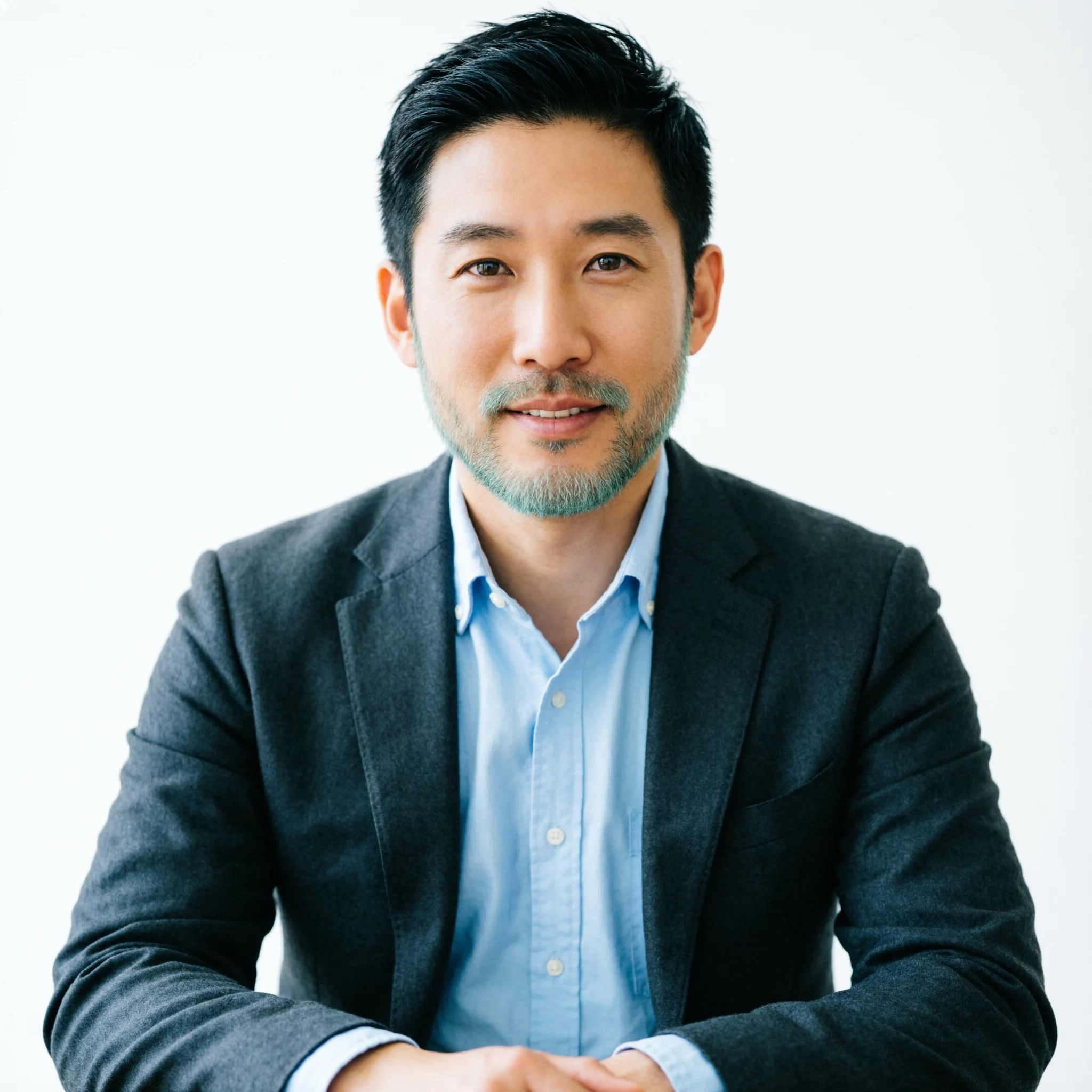
Liam James is a language enthusiast and content writer at Verseslay, specializing in word comparisons, grammar debates, and vocabulary insights. He helps readers understand language nuances through clear, engaging, and practical explanations.