The words tear vs tare are easy to confuse because they look and sound similar in some contexts, but they have completely different meanings. If you are learning English, writing professionally, or simply trying to avoid spelling mistakes, understanding this pair can make your writing much clearer.
Tear is a common English word with several meanings, including a drop of liquid from the eye and the act of ripping something. Tare, on the other hand, is mainly used in weighing, packaging, agriculture, and shipping. This guide explains tear vs tare with simple definitions, pronunciation tips, examples, common mistakes, and a useful comparison table.
Quick Answer: Tear vs Tare
The easiest way to understand the difference is:
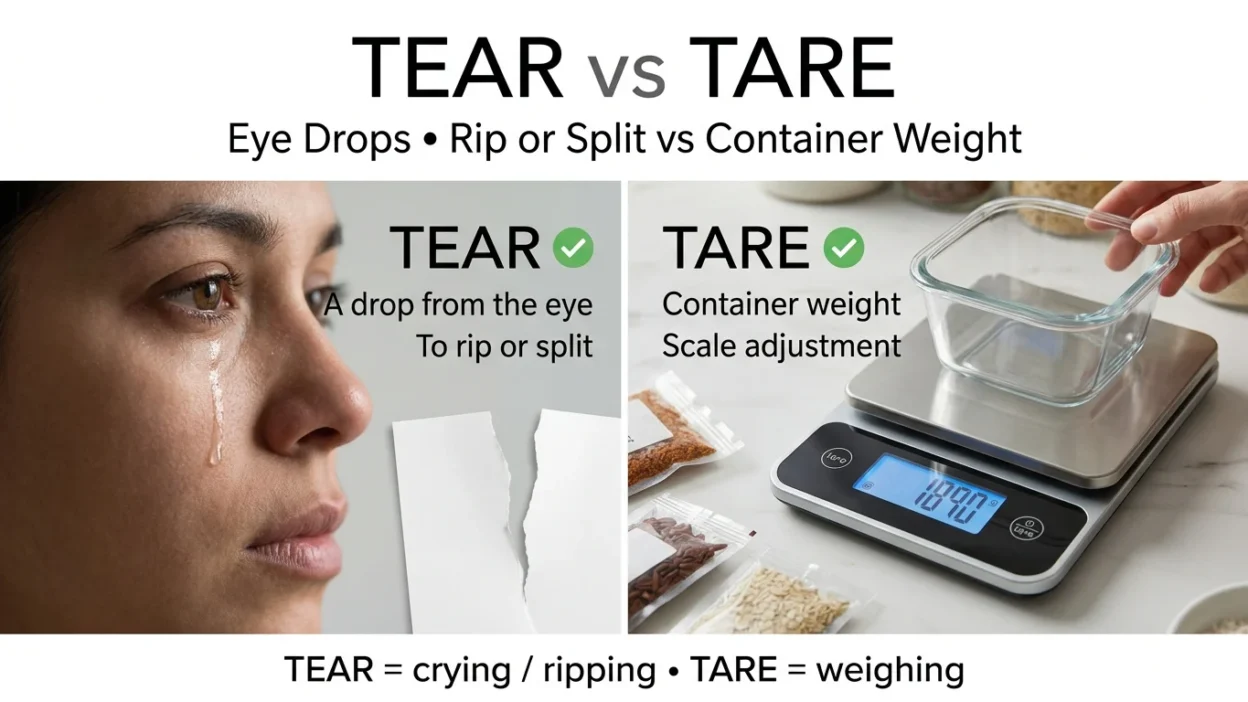
- Tear = a drop from the eye, or to rip something
- Tare = the weight of a container or packaging, or a type of plant
Examples:
A tear rolled down her cheek.
Here, tear means a drop of liquid produced by the eye.
Be careful not to tear the paper.
Here, tear means to rip or damage something by pulling it apart.
The scale automatically subtracts the tare weight.
Here, tare refers to the weight of the container or packaging.
A simple memory trick is:
Tear = crying or ripping
Tare = weighing or a plant
What Does Tear Mean?
Tear has several meanings and can function as both a noun and a verb.
One common meaning is a drop of liquid produced by the eyes.
For example:
A tear appeared in his eye.
She wiped a tear from her cheek.
He was moved to tears by the speech.
As a verb, tear can mean to rip, split, or pull something apart.
For example:
Be careful not to tear the page.
She accidentally tore her shirt.
The paper tore when I pulled it too quickly.
The word therefore has several different uses depending on context.
Tear as a Drop From the Eye
The noun tear is commonly associated with crying or emotional reactions.
Examples include:
One tear rolled down her cheek.
His eyes filled with tears.
She tried to hold back her tears.
The emotional scene brought tears to his eyes.
In these examples, tear refers to the liquid produced by the eyes.
The plural form is tears.
Tear as the Act of Ripping
Tear can also mean to damage or separate something by pulling it apart.
For example:
Do not tear the envelope.
I tore the paper by accident.
The child tore the wrapping paper.
The old fabric was beginning to tear.
This meaning is completely different from the meaning of tear as a drop from the eye.
Interestingly, these two meanings of tear also have different pronunciations.
The Two Pronunciations of Tear
One reason tear can be confusing is that the spelling remains the same even though the pronunciation changes.
When tear means a drop from the eye, it is pronounced like:
teer
For example:
A tear fell from her eye.
When tear means to rip something, it is pronounced like:
tair
For example:
Be careful not to tear the paper.
So:
tear = teer → drop from the eye
tear = tair → rip or damage
This is an important pronunciation distinction for English learners.
What Does Tare Mean?
Tare is much less common in everyday English than tear.
One important meaning of tare relates to weighing.
In weighing and packaging, tare weight is the weight of an empty container or packaging.
For example, imagine a box containing food. The total weight includes both the food and the box. The tare weight is the weight of the empty box.
If the total weight is 5 kilograms and the empty container weighs 1 kilogram, the contents weigh 4 kilograms.
This concept is widely used with scales, shipping, manufacturing, laboratories, and food packaging.
Tare Weight Explained
The word tare is especially important when discussing measurements.
Three related terms are useful:
- Gross weight = total weight, including the container
- Tare weight = weight of the empty container
- Net weight = weight of the contents without the container
For example:
Gross weight = 10 kg
Tare weight = 2 kg
Net weight = 8 kg
This is why you may see the word tare on digital scales.
A scale may have a tare button that resets the displayed weight to zero after a container has been placed on it.
Tare as a Verb
Tare can also be used as a verb in weighing contexts.
For example:
Press the tare button before adding the ingredients.
This means the scale should account for the weight of the container so that only the contents are measured.
Another example:
The technician tared the scale before taking the measurement.
Here, tared means the scale was adjusted to account for the container or other initial weight.
Tare as a Plant
There is another meaning of tare that may be unfamiliar to many English learners.
Tare can refer to certain plants in the pea or legume family, particularly plants in the genus Vicia.
For example:
The farmer found tare growing among the crops.
This meaning is less common in everyday modern English, but it can appear in agricultural, botanical, and historical writing.
Therefore, tare is not limited entirely to weighing.
Tear vs Tare Comparison Table
| Feature | Tear | Tare |
|---|---|---|
| Main meanings | Eye liquid; rip or split | Container weight; type of plant |
| Commonness | Very common | Less common |
| Pronunciation | Teer or tair, depending on meaning | Usually tair |
| Common context | Emotions, clothing, paper, objects | Scales, packaging, agriculture |
| Example | A tear fell from her eye. | Check the tare weight. |
| Verb use | To rip or damage | To adjust a scale for container weight |
The biggest difference is context.
If the sentence involves crying or ripping, you probably need tear.
If it involves a scale, container, packaging, or weighing, you probably need tare.
Common Examples of Tear
Here are some examples using tear:
A tear rolled down her face.
She wiped away her tears.
Do not tear the document.
I accidentally tore my jacket.
The paper began to tear.
He was close to tears.
These examples demonstrate both major meanings of tear.
Common Examples of Tare
Now look at tare:
The tare weight is printed on the package.
Press the tare button before weighing the ingredients.
The scale needs to be tared before use.
The gross weight includes the tare weight.
The shipping label lists the net and tare weights.
These examples all relate to weighing and measurement.
Tear vs Tare in Everyday English
In everyday conversation, tear is much more likely to appear than tare.
You may frequently hear:
I tore my shirt.
There were tears in her eyes.
But you are more likely to encounter tare in specialized situations such as:
- Grocery packaging
- Shipping
- Manufacturing
- Laboratory work
- Food preparation
- Digital scales
- Agriculture
This difference in frequency is useful when deciding which word you are likely looking for.
Common Mistakes With Tear and Tare
Mistake 1: Using Tare for Ripping
Incorrect:
I accidentally tared the paper.
Correct:
I accidentally tore the paper.
The verb meaning to rip is tear, with the past tense tore.
Mistake 2: Using Tear for Container Weight
Incorrect:
The tear weight of the box is 500 grams.
Correct:
The tare weight of the box is 500 grams.
When referring to the weight of an empty container, use tare.
Mistake 3: Confusing Tear With Tore
This is another common grammar issue.
The present tense is:
tear
The simple past is:
tore
The past participle is:
torn
For example:
I tear the paper.
I tore the paper yesterday.
I have torn the paper.
Do not use teared as the standard past tense of the verb meaning to rip.
Mistake 4: Confusing Tare With Tear Because They Sound Similar
The words can sound similar depending on pronunciation and accent, but their meanings are unrelated.
Always use the context to determine the correct spelling.
American vs British English
There is no major spelling difference between American and British English for tear or tare.
Both varieties use:
tear
and:
tare
with the same meanings.
The pronunciation of tear can vary according to its meaning in both varieties:
tear meaning eye liquid → generally pronounced teer
tear meaning rip → generally pronounced tair
Tare is generally pronounced like tair.
The spelling does not change between American and British English.
Synonyms for Tear
Depending on the meaning, tear has several related words.
When referring to liquid from the eye:
- Drop
- Tear
- Teardrop
When referring to ripping:
- Rip
- Split
- Shred
- Rend
- Damage
- Rupture
For example:
Tear the paper
can sometimes be expressed as:
Rip the paper
However, the exact synonym depends on the situation.
Related Terms for Tare
When tare refers to weighing, related terms include:
- Tare weight
- Gross weight
- Net weight
- Container weight
- Packaging weight
- Scale
- Weighing
Understanding these terms makes tare much easier to recognize in technical or commercial contexts.
FAQs
1. What is the difference between tear and tare?
Tear can mean a drop of liquid from the eye or the act of ripping something. Tare commonly refers to the weight of an empty container or a type of plant.
2. How do you pronounce tear?
It depends on the meaning. Tear meaning a drop from the eye is generally pronounced like teer. Tear meaning to rip is generally pronounced like tair.
3. How do you pronounce tare?
Tare is generally pronounced like tair, which rhymes with words such as care and fair.
4. What is tare weight?
Tare weight is the weight of an empty container or packaging. It is subtracted from the gross weight to determine the net weight of the contents.
5. Is tare a verb?
Yes. In weighing contexts, tare can be used as a verb meaning to adjust a scale so that the weight of a container is not included in the measurement.
6. What is the past tense of tear?
When tear means to rip, its simple past tense is tore, and its past participle is torn.
For example:
She tore the paper.
She has torn the paper.
7. Is tare used in American English?
Yes. Tare is standard in American English, especially in contexts involving weighing, packaging, shipping, and agriculture.
8. Is tare used in British English?
Yes. British English also uses tare for container weight and certain plants. The spelling is the same.
Final Summary
The difference between tear vs tare becomes much easier when you focus on meaning and context. Tear is a common word that can refer to liquid from the eye or the act of ripping something. It has two different pronunciations depending on which meaning is intended. Tare, meanwhile, is most commonly associated with weighing and refers to the weight of an empty container or packaging.
Although these words may sound similar, they are not interchangeable. If someone is crying, use tear. If something is being ripped, use tear. If you are weighing a container or adjusting a scale, use tare.

Liam James is a language enthusiast and content writer at Verseslay, specializing in word comparisons, grammar debates, and vocabulary insights. He helps readers understand language nuances through clear, engaging, and practical explanations.