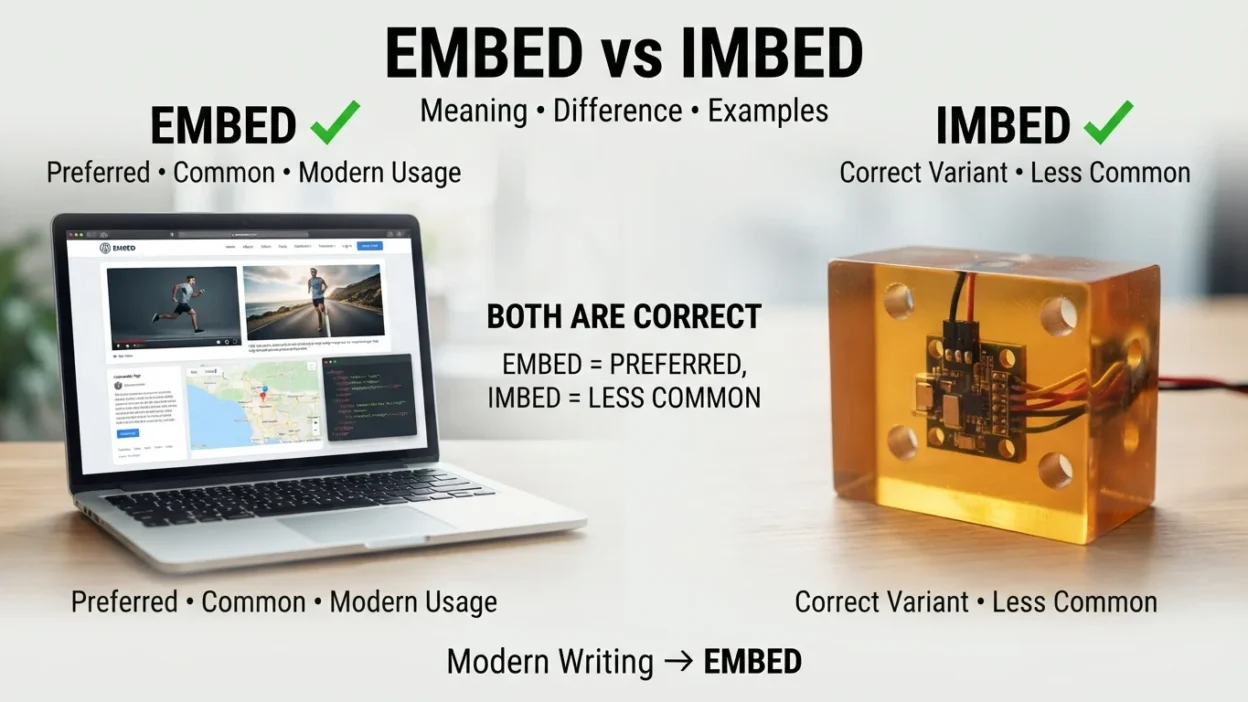
If you have ever wondered about embed vs imbed, you are not alone. These two words look slightly different, but they have essentially the same meaning. The main question is which spelling you should use in modern English and whether there is any difference between them.
In most situations, embed is the preferred and much more common spelling, especially in modern American and British English. Imbed is also a legitimate spelling, but it is less common. Understanding this small spelling difference can help you choose the most natural word for articles, academic writing, technical content, and everyday communication.
Quick Answer: Embed vs Imbed
Embed and imbed are both valid spellings of the same verb.
- Embed → preferred and much more common
- Imbed → acceptable but less common
- Meaning → to place something firmly or deeply within something else
- Past tense → embedded
- Present participle → embedding
For modern writing, embed is generally the safest choice.
Examples:
You can embed a video in your article.
The scientist embedded the sensor in the device.
The photograph was embedded in the document.
What Does Embed Mean?
Embed means to place something firmly, deeply, or securely inside another thing.
The word can be used literally or figuratively.
In a physical sense, something can be embedded inside another object.
For example:
The stone was embedded in the wall.
The technician embedded a small sensor inside the machine.
In technology and digital media, embed has a very common meaning. It can describe placing content such as a video, image, map, or piece of code directly into a website or digital document.
For example:
The developer embedded a video on the webpage.
The article includes an embedded image.
What Does Imbed Mean?
Imbed has essentially the same meaning as embed.
It can mean to place something deeply or firmly into another object or substance.
For example:
The jewel was imbedded in the surface.
The researcher imbedded the device inside the equipment.
However, imbed is considerably less common than embed in contemporary English.
Because embed is now the dominant spelling, most writers will find it more natural and familiar.
Embed vs Imbed Comparison Table
| Feature | Embed | Imbed |
|---|---|---|
| Meaning | Place something firmly within something else | Same basic meaning |
| Correct spelling | Yes | Yes |
| Modern usage | Very common | Less common |
| Technology usage | Extremely common | Rare |
| American English | Preferred | Less common |
| British English | Preferred | Less common |
| Past tense | Embedded | Imbedded |
The biggest practical difference is frequency and preference, not meaning.
Is Embed or Imbed More Common?
Embed is overwhelmingly more common in modern English.
This is particularly obvious in technology, journalism, publishing, education, and online content.
You frequently see phrases such as:
- Embed a video
- Embed an image
- Embed a link
- Embed a map
- Embed code
- Embedded content
- Embedded media
- Embedded software
The spelling imbed is still recognized, but it is much less likely to be the preferred choice in modern professional writing.
When to Use Embed
Use embed when you want the most standard and widely recognized spelling.
It works especially well in technical and digital contexts.
Examples:
You can embed a YouTube video on your website.
The developer embedded the code into the webpage.
The article contains an embedded image.
The map can be embedded into the homepage.
The software has an embedded security feature.
Because technology uses the word so frequently, embed is by far the more familiar form in digital writing.
When to Use Imbed
You can use imbed because it is an accepted variant.
However, there is usually little reason to choose it over embed, particularly in modern general-purpose writing.
For example:
The object was imbedded in the material.
This sentence is understandable and grammatically acceptable, but many modern readers will be more accustomed to:
The object was embedded in the material.
If you want your writing to look contemporary and familiar, embed is usually the better choice.
Embed in Technology
One of the most important modern uses of embed is related to websites and digital media.
To embed something means to place content from one source directly into another platform.
Common examples include:
- Embedded YouTube videos
- Embedded social media posts
- Embedded maps
- Embedded images
- Embedded audio players
- Embedded forms
- Embedded code
For example:
The website allows users to embed videos in their articles.
The teacher embedded an educational video into the lesson page.
The developer embedded a map showing the location of the event.
In these contexts, imbed would sound unusual to most readers.
Embed as a Physical Action
Embed can also describe a physical object becoming firmly fixed inside another material.
Examples:
A piece of glass became embedded in the wood.
The roots were embedded deep in the soil.
The metal component was embedded inside the structure.
The fossils were embedded in layers of rock.
This usage is not limited to technology.
Embed in a Figurative Sense
The word can also be used figuratively to describe an idea, belief, value, or habit becoming deeply established.
Examples:
The experience became deeply embedded in her memory.
The organization embedded safety into its daily procedures.
The teacher wanted to embed good study habits in the students.
These examples show that embed can describe something becoming firmly established rather than simply being physically placed somewhere.
Common Mistakes
Mistake 1: Thinking Imbed Is Incorrect
It is not necessarily incorrect.
Imbed is a recognized spelling variant of embed. However, it is much less common.
For modern writing, embed is usually the better choice.
Mistake 2: Using Imbed in Technology
You may occasionally see imbed used in technical writing, but embed is overwhelmingly more familiar in technology.
Prefer:
Embed a video into the webpage.
Rather than:
Imbed a video into the webpage.
Mistake 3: Confusing Embed With Insert
Embed and insert can sometimes have similar meanings, but they are not always interchangeable.
Insert generally means putting something into something else.
Embed often suggests that something becomes firmly integrated or incorporated within another thing.
For example:
You can insert an image into a document.
You can embed a video into a webpage.
The exact choice depends on the context.
Mistake 4: Spelling the Past Tense Incorrectly
The past tense of embed is embedded.
Correct:
The video was embedded in the article.
The image was embedded in the document.
The code was embedded into the webpage.
The spelling uses a double d.
Embed, Embedded, and Embedding
Understanding the different forms can make the word easier to use.
Embed
This is the base form.
Example:
We will embed the video tomorrow.
Embedded
This is the past tense and past participle.
Example:
The video is embedded in the article.
Embedding
This is the present participle or gerund form.
Example:
Embedding videos can make an article more engaging.
The spelling remains consistent with the preferred form embed.
American vs British English
Both American and British English generally prefer embed over imbed.
There is no major regional meaning difference between the two words.
American English commonly uses:
Embed the video in the article.
British English also commonly uses:
Embed the video in the article.
The spelling imbed can appear in both varieties, but it is much less common.
Therefore, unlike differences such as color vs colour or center vs centre, embed vs imbed is not primarily an American-versus-British spelling difference.
It is mainly a difference in usage frequency and preference.
Embed vs Imbed in Formal Writing
For essays, reports, websites, academic content, professional documents, and business communication, embed is generally the stronger choice.
It is:
- More common
- More recognizable
- More widely used in technology
- Preferred by modern style conventions
- Easier for most readers to recognize
Unless you have a specific reason to use imbed, choosing embed will usually be the best option.
FAQs
1. Is embed or imbed correct?
Both are accepted spellings, but embed is much more common and is generally preferred in modern English.
2. Is imbed a real word?
Yes. Imbed is a legitimate variant spelling of embed, although it is much less common.
3. Which spelling should I use?
Use embed in most situations. It is the standard and more widely recognized spelling.
4. Is embed American or British English?
Embed is used in both American and British English and is the preferred form in both varieties.
5. Is imbed an American spelling?
Imbed can be found in American English, but it is not the standard preferred alternative to embed. It is simply a less common variant.
6. What is the past tense of embed?
The past tense is embedded.
Example:
The video was embedded in the webpage.
7. What is the difference between embed and insert?
Insert generally means putting something into something else. Embed often suggests that something becomes firmly integrated or incorporated within another thing.
8. Should I use embed in technical writing?
Yes. Embed is strongly preferred in modern technical and digital writing, especially when discussing videos, images, code, maps, software, and online content.
Final Summary
The difference between embed vs imbed is mainly about usage rather than meaning. Both words can mean to place something firmly or deeply within something else, but embed is far more common in contemporary English. It is especially dominant in technology, web development, publishing, and digital media.
Imbed is still a valid variant, but most readers are more familiar with embed. If you are writing an article, website, report, email, or academic assignment, choosing embed will generally make your writing sound more natural and modern.

Liam James is a language enthusiast and content writer at Verseslay, specializing in word comparisons, grammar debates, and vocabulary insights. He helps readers understand language nuances through clear, engaging, and practical explanations.